

El Born, Barcelona: The Complete Guide to the Neighbourhood
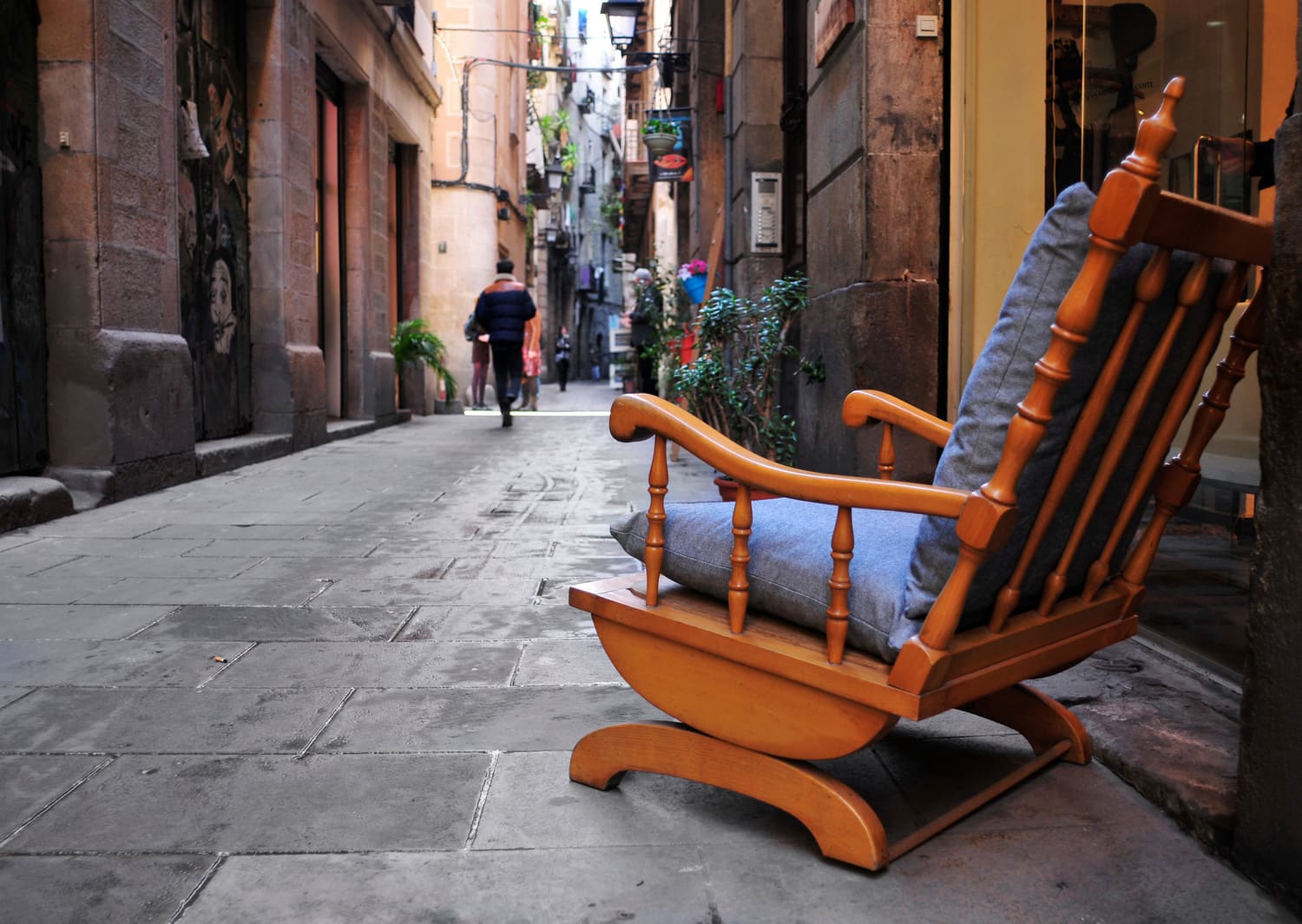
El Born is the neighbourhood tourists mean when they say Barcelona’s “old town, but the nice part”: medieval stone, a basilica with no ornament inside, and a promenade that was a produce market two centuries ago. It’s small enough to cover on foot in an afternoon, and most of what’s worth seeing sits within ten minutes of Santa Maria del Mar.
El Born at a glance
| Where it is | Southeastern corner of the official Sant Pere, Santa Caterina i la Ribera neighbourhood, in Ciutat Vella |
| Known for | Santa Maria del Mar, the Picasso Museum, Carrer de Montcada’s medieval palaces, and a dense cluster of independent restaurants and shops |
| Best for | A half-day or full-day visit on foot; a short stay if you want to walk everywhere and don’t mind narrow streets |
| Time needed | 2–3 hours for the highlights, a full day with the museums and a proper lunch |
| Nearest metro | Jaume I (L4) is the closest stop to both the basilica and the Picasso Museum; Arc de Triomf (L1) covers the northern edge |
| Noise level | Quiet by day on the side streets, loud on Passeig del Born and around the bars at night, especially Thursday to Saturday |
Where exactly is El Born?
There’s no official “El Born” on a city map. The name is what barcelonins actually call the southeastern part of a larger, clunkier-sounding district: Sant Pere, Santa Caterina i la Ribera. That’s the name you’ll find on street signs and council documents; almost nobody says it out loud.
In practice, El Born is bounded by Carrer de la Princesa to the north, cross it and you’re in Sant Pere, a quieter, less visited area with the same medieval bones, Via Laietana to the west, where it blends into the Gothic Quarter, Passeig de Picasso and Parc de la Ciutadella to the east, and the edge toward Pla de Palau and Barceloneta to the south. Passeig del Born, the wide pedestrian street with the old market at its end, runs through the middle of it.
This matters for one practical reason: a lot of what gets sold online as “El Born”, including some hotel listings, is technically in Sant Pere. It’s not a problem; Sant Pere is calmer and still a five-minute walk from everything in this guide. But it’s worth knowing which one you’re booking, especially if you’re still deciding between neighbourhoods: see our full comparison of where to stay in Barcelona.
A short history: why El Born looks the way it does
Picasso Museum
Five adjoining medieval palaces on Carrer de Montcada hold the largest collection anywhere of Picasso’s early work, the paintings from Barcelona and his teens, before Cubism, which is the opposite of what most visitors expect. General admission is €12 for the permanent collection or €14 with temporary exhibitions; under-18s go free year-round. The museum also runs free entry on Thursday, Friday and Saturday evenings (check current hours, as the exact window shifts with the season) and on the first Sunday of the month, both require booking ahead, and both fill up. Closed Mondays. If you’re deciding which museums are worth the time on a short trip, see how the Picasso Museum ranks against Barcelona’s other major collections.
Santa Maria del Mar
The single building that defines the neighbourhood, and the reason El Born was once nicknamed “the cathedral of the sea.” The basilica is free to walk into outside visiting hours (roughly evenings and Sunday mornings, check the current schedule), and there’s a paid cultural visit (around €8) on weekdays and Saturday mornings through afternoon that includes the crypt, the choir, and, the part worth paying for, the rooftop terraces, with a view over the neighbourhood’s rooftops that nothing else in El Born offers.
El Born Centre de Cultura i Memòria
Walking into the old market building and looking down at the excavated 18th-century street grid underneath is free, no ticket needed for the archaeological site itself. A small paid guided visit and the permanent exhibition (a few euros) go further into what you’re looking at: a working-class neighbourhood flattened in 1714 to build the Ciutadella, rediscovered when the market was renovated in the 2000s. It’s the single best place in Barcelona to understand why El Born’s edges look the way they do.
Carrer de Montcada and its palaces
One short street holds the Picasso Museum, the Palau Dalmases, the Museu Europeu d’Art Modern (MEAM), and the Moco Museum Barcelona, four very different reasons to walk its full length even if you only go into one of them. The street itself, barely wide enough for two people to pass, is the best surviving stretch of merchants’ Barcelona in the city.
Palau de la Música Catalana
Technically just over the line in Sant Pere, on Carrer Sant Pere Més Alt, but close enough that no one treats it as a separate trip. Lluís Domènech i Montaner’s 1908 concert hall is a UNESCO World Heritage site and arguably the most extravagant Modernista interior in the city, more stained glass and ceramic than Casa Batlló, with none of the queues. A self-guided visit runs around €24; it’s worth it specifically for the inverted stained-glass skylight over the main hall, which you can’t appreciate from outside.
Mercat de Santa Caterina
Barcelona’s second-oldest market, best known now for the wavy, multicoloured roof added in the 2005 renovation, visible from well outside the building. Go to buy something, not just to look: the stalls sell produce and seafood at local prices, a rarity this close to the Born’s tourist core. It’s one of the better food markets in the city for exactly that reason, see how Santa Caterina market compares to La Boqueria and the rest. Market hours run roughly 7:30am–3:30pm Monday, Wednesday and Saturday, and 7:30am–8:30pm Tuesday, Thursday and Friday; closed Sunday.
Parc de la Ciutadella and the Arc de Triomf
The park built on the ruins of the neighbourhood that stood here until 1714 is now El Born’s green edge, free, open daily, and home to the city zoo, the Catalan Parliament, and a fountain with early design input from a young Gaudí. The Arc de Triomf, a few minutes further north, was built as the entrance gate for the 1888 Universal Exposition and has nothing to do with Napoleon’s arch beyond the name.
Smaller museums: worth it or skip?
El Born has more small, single-subject museums than any other central neighbourhood, and not all of them earn a place in a short visit.
- Museu de la Xocolata: a genuinely fun half-hour for families or anyone travelling with kids, built around chocolate sculptures of Barcelona landmarks. Skip it if you’re short on time and have already done the bigger museums; nothing here is essential.
- MEAM: a private collection of contemporary figurative and realist painting and sculpture, inside a restored 18th-century palace. Worth it if you like technically precise, representational art; skip it if your taste runs contemporary or abstract.
- Moco Museum Barcelona: Banksy, street art and contemporary names in a Montcada palace. Worth it for a quick, Instagram-friendly stop; it’s a franchise of the Amsterdam original, not a Barcelona-specific collection, so don’t expect local context.
The streets and squares that make El Born
The sights get the attention, but El Born is a street-level neighbourhood: most of what makes it worth visiting happens in the gaps between the landmarks.
Passeig del Born is the spine: a wide, tree-lined promenade running from the basilica to the old market, lined with bars and restaurants on both sides. It’s named for the jousting tournaments once held here, which is also where the neighbourhood’s name comes from. Pleasant at any hour, but it’s the most touristy strip in El Born: treat it as a place to pass through, not necessarily where you eat.
Plaça de Santa Maria and the Fossar de les Moreres, the sunken red-brick square beside the basilica, are easy to walk past without noticing what they are. The Fossar marks the mass grave of the defenders killed in the 1714 Siege of Barcelona, when Philip V’s troops took the city at the end of the War of the Spanish Succession. An eternal flame has burned over the site since 2001, and every 11 September (Catalonia’s national day, the Diada), it’s where official wreaths are laid. You don’t need to know the history to find the square striking, but knowing it changes what you’re looking at.
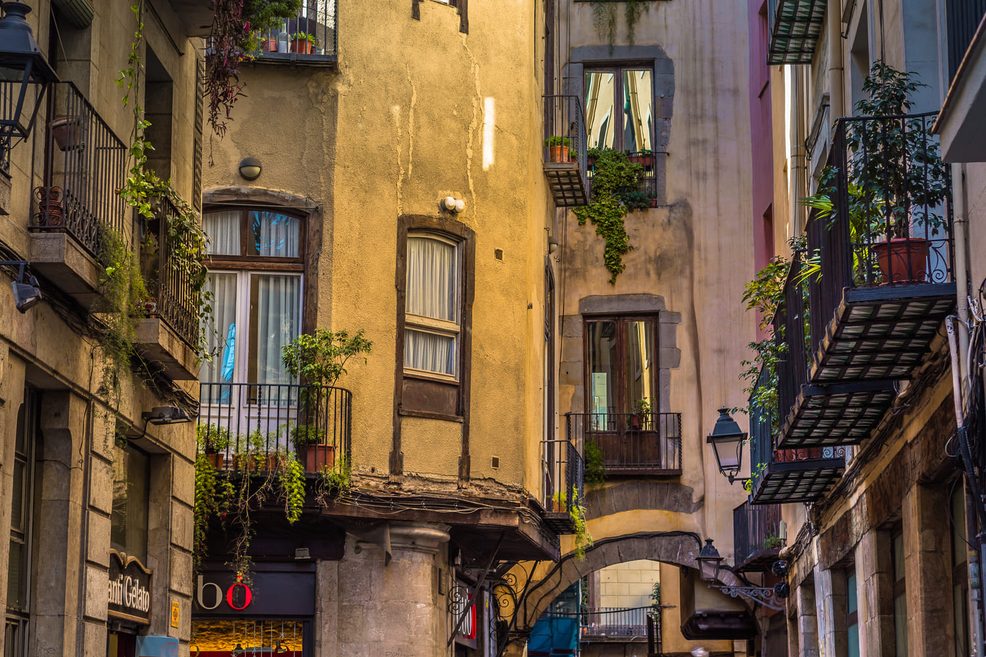
Carrer del Rec and Carrer de l’Argenteria, the two streets that run roughly parallel to Passeig del Born, are where El Born’s independent shops and better restaurants actually cluster. Argenteria (“silversmiths’ street”) was the jewellers’ quarter in medieval Barcelona and still has a few workshops; it’s also the direct route in from Via Laietana and Jaume I metro. The Rec runs the other side of the basilica and rewards a slow walk: small design studios, a couple of the neighbourhood’s best wine bars, and noticeably fewer tour groups than Passeig del Born fifty metres away. For more streets like it, see the quieter corners of El Born.
A two-hour walk through El Born
This covers the core of the neighbourhood on foot, in an order that doesn’t double back on itself. Add 45 minutes if you go inside the Picasso Museum, and another 20 for the Santa Maria del Mar rooftop.
- Start at Jaume I metro (L4). Walk northeast up Carrer de l’Argenteria.
- Carrer de l’Argenteria (10 min). The old silversmiths’ street, and the most atmospheric approach to the basilica: it opens onto the façade almost without warning.
- Santa Maria del Mar (15 min, or 35 with the rooftop). Go inside even if you skip every other church in Barcelona on this trip.
- Fossar de les Moreres (5 min). The sunken square on the basilica’s south side.
- Carrer de Montcada and the Picasso Museum (15 min, or 60 inside). Walk the full length of the street even if you don’t queue for the museum.
- Passeig del Born (10 min). Walk its length toward the old market building.
- El Born Centre de Cultura i Memòria (15 min). Free to walk the archaeological site from the elevated walkways.
- Carrer del Rec (15 min). Loop back along the quieter parallel street, away from the passeig.
- Mercat de Santa Caterina (10 min). A ten-minute walk north from the Rec; worth it even just to see the roof from outside.
- Palau de la Música Catalana (10 min from outside, 75 with a visit). The walk ends two streets further on, a short walk from Urquinaona metro (L1/L4) for onward travel.
Do it in reverse if you’re staying near Urquinaona rather than Jaume I; nothing about the route depends on direction.
Where to eat in El Born
The neighbourhood has more restaurants per block than almost anywhere in Barcelona, which is the problem: density like that means a lot of mediocre kitchens surviving purely on foot traffic. The useful filter is simple: the restaurants worth paying for in El Born are almost never the ones with a tout outside or a laminated menu in four languages, and that rules out most of Passeig del Born itself. Walk one street over, to Carrer del Rec or Carrer de l’Argenteria, and the quality goes up noticeably.
A handful worth knowing, each for a different reason:
- Cal Pep (Plaça de les Olles): no menu, no reservations for the counter, and arguably the best seafood tapas experience in the city. You sit, and Pep’s team decides what you eat. Closed Sundays; arrive before 1:30pm or after 9pm if you don’t want to queue.
- Bar del Pla (Carrer de Montcada): tapas under medieval vaulted ceilings two doors from the Picasso Museum, which makes it the obvious lunch stop between sights. Squid-ink croquettes are the thing to order.
- 7 Portes, open since 1836, on the edge of El Born toward the port, and the rare historic restaurant that hasn’t coasted on its age: the rice dishes are still genuinely good, not just famous.
- Cuines Santa Caterina: inside the market itself, under the wavy roof, serving everything from Catalan classics to sushi off the same open kitchen. Useful if you want a proper sit-down meal without leaving the market.
For the full list, organized by what you’re after, we’ve separated these out: where to eat in El Born for restaurants, and tapas bars in El Born for a longer tapas crawl.
Where to drink: vermouth, wine bars and cocktails
El Born and the Gothic Quarter together have the highest concentration of wine bars in Barcelona, and the good ones don’t look like much from outside.
- El Xampanyet (Carrer de Montcada), a cava-and-anchovy bar that’s barely changed since 1929: standing room at a zinc counter, the house cava poured from unlabelled bottles, nothing on the menu beyond anchovies and a few conservas. Closed Mondays.
- La Vinya del Senyor (Plaça de Santa Maria): a wine bar with over 3,000 references and, more importantly, a terrace facing the Gothic façade of Santa Maria del Mar. No reservations; go on a weekday evening if you want to actually get a table.
- Bar Brutal / Can Cisa (Carrer de la Princesa): the reference point for natural and biodynamic wine in Barcelona, run by people who clearly prefer talking about the bottles to upselling them.
- El Chigre 1769 (Carrer dels Carders), for the hour of vermouth rather than wine: house vermut on tap, served simply with a slice of lemon, in a neighbourhood that takes the ritual seriously.
Shopping in El Born
El Born’s retail identity splits in two: centuries-old family businesses that have survived by doing one thing well, and a newer wave of independent design and fashion shops that moved in once the area gentrified in the 2000s.
On the historic side, Casa Gispert (Carrer dels Sombrerers), roasting nuts and coffee over the same wood-fired oven since 1851, and El Rei de la Màgia (Carrer de la Princesa), Europe’s oldest working magic shop, founded in 1881: both still functioning as actual shops, not museums. For design and fashion, the streets to wander are Carrer del Rec and Carrer de l’Argenteria, where small ceramics studios, independent fashion labels and concept stores cluster without the chain stores that have taken over the Gothic Quarter’s main streets.
One practical note: most of the independent shops close Sunday and don’t open until 10 or 11am even on weekdays. If a specific shop matters to your trip, check its hours before you go rather than assuming Barcelona retail hours apply everywhere; many smaller places still close for a couple of hours at lunch, too.
El Born by day and by night
El Born isn’t the same neighbourhood at 9am, 2pm and 11pm, and most guides only describe one of them.
Morning is the quiet version. The streets around Santa Maria del Mar are nearly empty before 9:30, Mercat de Santa Caterina is full of locals rather than tourists, and this is the best window to photograph Carrer de Montcada without a crowd in every shot. It’s also, inconveniently, when some of the neighbourhood’s best small shops are still closed: most don’t open before 10 or 11.
Afternoon is when El Born fills up: cruise-ship groups and day-trippers from the Gothic Quarter arrive, Passeig del Born gets loud, and the Picasso Museum queue is at its longest. Barcelona’s lunch rhythm still applies here too: many independent restaurants and shops close for a couple of hours after 3 or 4pm, which catches visitors used to all-day opening hours off guard.
Evening, roughly 7 to 9pm, is vermouth hour, and El Born takes it seriously. This is arguably the neighbourhood’s best stretch: terraces fill up, the light on Santa Maria del Mar’s stone façade turns gold, and the pace is unhurried in a way the middle of the day isn’t.
Night splits the neighbourhood in two. Passeig del Born and the streets immediately around it get genuinely loud on Thursday, Friday and Saturday nights, with crowds spilling onto the street well past midnight. A block or two over (Carrer del Rec, the streets north toward Sant Pere), the volume drops noticeably. If you’re staying in El Born and value sleep, which street you’re on matters more than which hotel.
One seasonal note: like most of central Barcelona, a share of El Born’s smaller restaurants and shops close for all or part of August. If you’re visiting in high summer, don’t assume everything on this page will be open; a quick check the day before saves a wasted walk.
Is El Born a good area to stay in?
Yes, with real caveats worth knowing before you book.
What works: everything in this guide is within a 15-minute walk, often less. You can see the Picasso Museum before breakfast and be drinking vermouth on a terrace by evening without touching public transport. The architecture is some of the best-preserved medieval fabric in the city, and that’s true of the street you sleep on, not just the sights you visit.
What doesn’t: narrow streets mean most hotels can’t offer parking, luggage trolleys struggle on the cobblestones, and noise is the recurring complaint in reviews of hotels here: thin walls in centuries-old buildings and street noise on weekend nights are a real combination, not a rare one. It’s also not the neighbourhood for a quiet, spread-out stay; if you want space and silence, this isn’t it.
Good fit: couples and first-time visitors who want to walk everywhere and don’t mind a lively street. Less good fit: families who need space or an early bedtime for kids, and anyone sensitive to street noise who hasn’t checked whether their room faces a quiet side or a bar-lined one.
Musik Boutique Hotel, in brief
One option actually in the neighbourhood, at Sant Pere Més Baix, 62, which puts it at the quieter, northern edge of El Born, in Sant Pere rather than the busier core around Passeig del Born. It’s a three-star, adults-only hotel (no under-16s), which won’t suit everyone, but does mean the soundproofed rooms aren’t competing with children’s bedtimes either. It’s a three-minute walk to the Palau de la Música and about five to the Picasso Museum, with a fireplace lobby, a small bar and a rooftop terrace.
The honest trade-off: it’s a simple three-star property, not a design hotel, and there’s no on-site parking, consistent with most of the neighbourhood. If you want to be right in the middle of the action on Passeig del Born itself, this is a few minutes’ walk from there rather than on top of it, which, given what this guide says above about weekend noise, is arguably an advantage rather than a drawback.
Getting to El Born and moving around
Three metro stations cover the neighbourhood, and which one you want depends on where you’re headed: Jaume I (L4) is the natural entry point for Santa Maria del Mar and the Picasso Museum; Barceloneta (L4) sits closer to the southern end, near El Born CCM; Urquinaona (L1 and L4) is the stop for the Palau de la Música, at the Sant Pere edge.
From the airport, two options make sense. The Aerobus to Plaça de Catalunya takes about 35 minutes (roughly €7.50 one-way), then it’s two stops on Metro L1 or L4 into El Born; call it 45 minutes door to door. The alternative is the R2 Nord train to Barcelona Sants or Passeig de Gràcia, then a transfer to L4; slower, but noticeably cheaper, and a reasonable trade if you’re not in a rush. Estació de França, a few minutes’ walk from El Born CCM, also handles some regional and long-distance trains if that’s how you’re arriving.
Once you’re there, walk. El Born is compact enough that nothing in this guide is more than 15 minutes from anything else on foot, and the streets are narrow and largely pedestrianised; a taxi won’t save you time once you’re actually inside the neighbourhood.
Beyond El Born: what’s next door
The Gothic Quarter, across Via Laietana, is El Born’s older and denser neighbour: narrower streets, the cathedral, and considerably more foot traffic. The walk between the two takes minutes, so combining them in a single day is the norm rather than the exception.
Barceloneta, a ten-minute walk south past El Born CCM, trades medieval streets for a 19th-century fishing-quarter grid and Barcelona’s closest city beach. Worth the walk for paella by the water, or simply to see how different the two neighbourhoods feel a few blocks apart: see our full Barceloneta beach guide if that’s the plan.
Sant Pere, the quieter half of the official Sant Pere, Santa Caterina i la Ribera district, starts just north of Carrer de la Princesa. Same medieval bones, same history, far fewer visitors: worth the extra five minutes of walking on a day when El Born itself feels crowded.