

Where to Stay in Barcelona: the 8 Neighbourhoods Compared
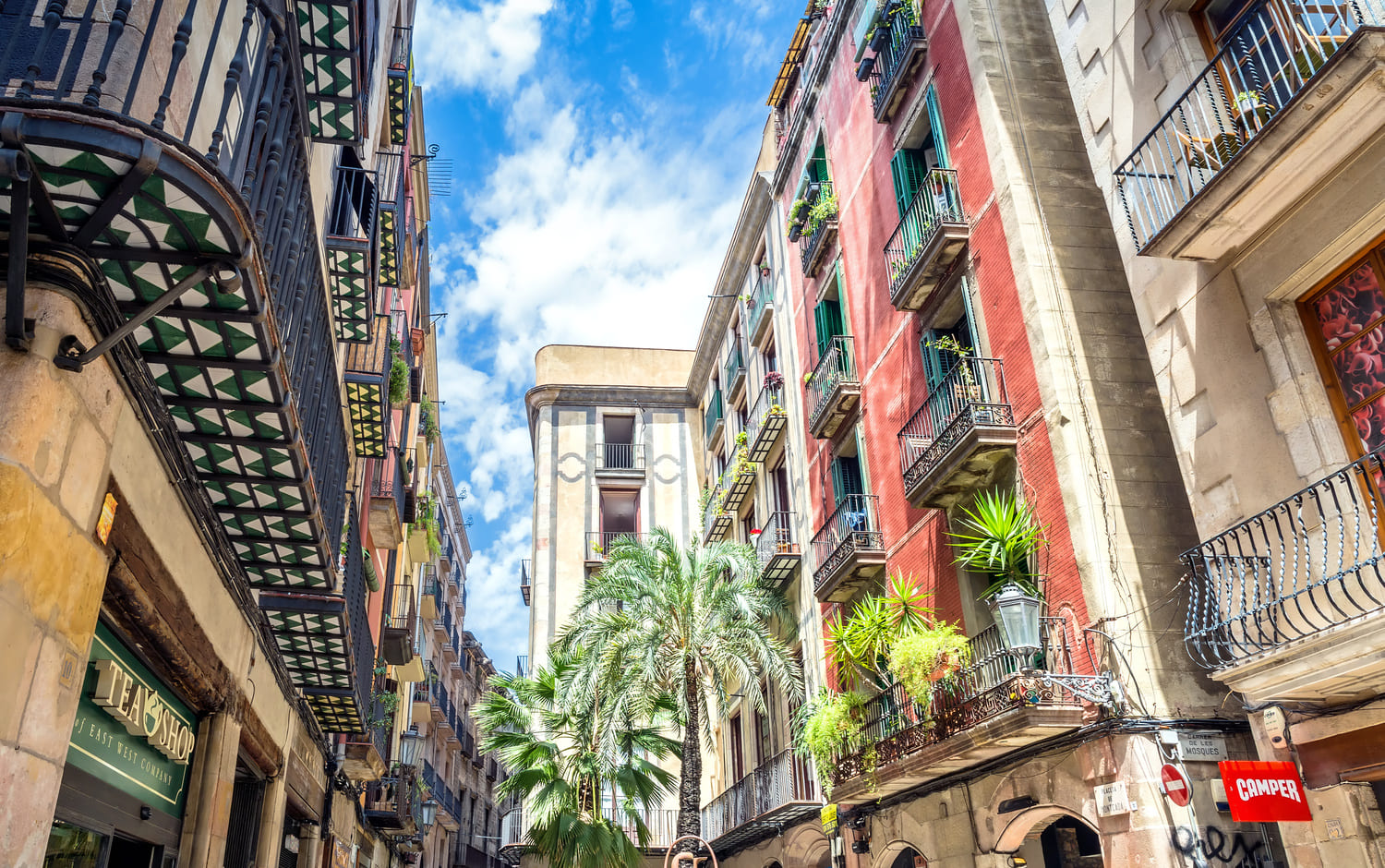
If you only have three or four nights, the best place to stay in Barcelona is the old city (the Born, Sant Pere or the Gòtic) or the lower half of the Eixample, around Passeig de Gràcia. Both are within walking distance of the main sights and well connected by metro. Every other neighbourhood in this guide is a good choice for a particular kind of trip and a poor one for the wrong trip: Gràcia is charming but 25 minutes on foot from Plaça de Catalunya, and Barceloneta is minutes from the sand but far from the sights. We compare eight areas on what actually decides a stay: night noise, walking distance, metro access and arriving with luggage, and we say plainly what the catch is in each. We are Musik Boutique Hotel, in Sant Pere, a short walk from El Born, so we know one of them from the inside. We will say so where it matters.
The short answer: which area suits which traveller
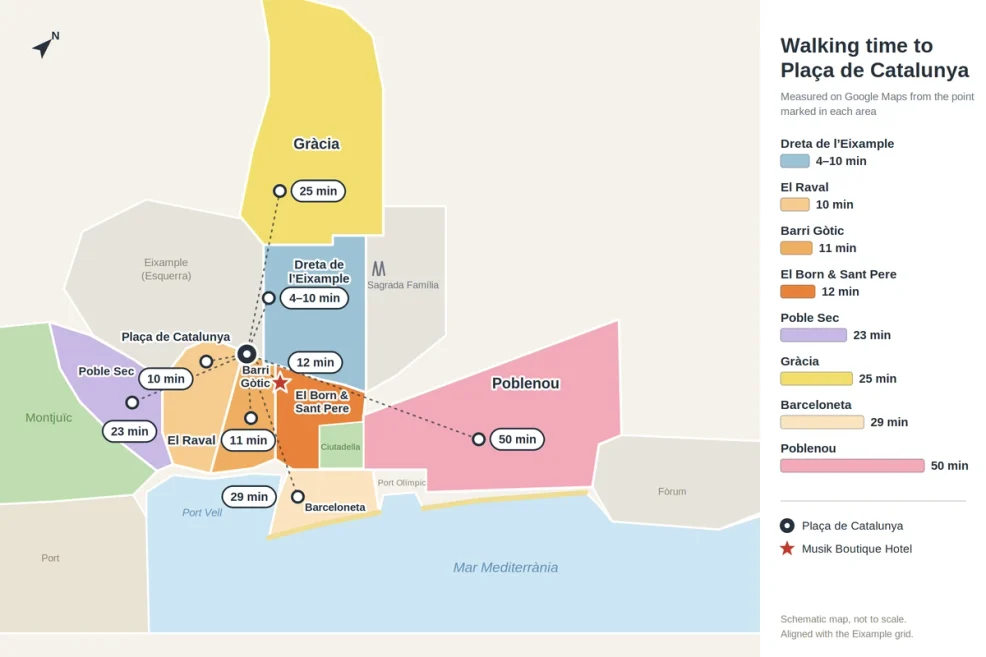
For a first visit of three or four nights, choose El Born and Sant Pere or the Dreta de l’Eixample, and treat everything else as a trade-off you make on purpose. Walking times were measured on Google Maps from the point named in each row; the sections below give the detail and the sources.
| Area | Best for | At night | Walk to Plaça de Catalunya | The catch |
|---|---|---|---|---|
| El Born and Sant Pere | Couples, short breaks | Lively around the Passeig del Born, calmer further north | 12 min (from our door) | Noise near the Passeig del Born |
| Barri Gòtic | First-timers who want to walk everywhere | Loud beside La Rambla, better towards the cathedral | 11 min (from Plaça Sant Jaume) | Night noise on the Rambla side, crowds |
| Dreta de l’Eixample | Modernist architecture, lifts, comfort | Few late-night crowds, but traffic | 4-10 min (from Passeig de Gràcia metro) | Traffic noise, less old-town atmosphere |
| Gràcia | Second visits, week-long stays | Lively squares, festival week in August | 25 min (from Plaça de la Vila de Gràcia) | Far from the sights, metro every day |
| El Raval | Culture, independent travellers | Noise around Plaça dels Àngels | 10 min (from MACBA) | Street disorder in the lower Raval |
| Barceloneta | Summer beach stays | Mixed, local noise near the seafront | 29 minutes (from Plaça del Poeta Boscà) | Far from the sights, summer crowds |
| Poble Sec | Pintxos, Montjuïc | Terraces on Carrer de Blai open to midnight or 1 am | 23 min (from Carrer de Blai) | Terrace noise, slopes |
| Poblenou | Longer stays, beach, cycling | Calm, except the leisure triangle | 50 min (from Rambla del Poblenou) | Far out, one nightlife hotspot |
Barcelona’s layout: how far apart things really are
From our door in Sant Pere, the cathedral is eight minutes on foot, Plaça de Catalunya twelve, La Boqueria fifteen and Barceloneta beach twenty-five. Stay anywhere in the old city and you can walk to most of what you came to see.
The Eixample, the grid of wide streets north of Plaça de Catalunya, is the easiest part of the city to navigate: every block is the same size and the metro is never far.
Beyond the centre, the metro does the work: in Gràcia, Poble Sec and Poblenou you will take the train every day, so make that a deliberate choice, not a surprise on day two.
Ciutat Vella is four neighbourhoods, not one
The thing a map hides is that the old town is not one place. Ciutat Vella, the historic district, is made up of four neighbourhoods that feel nothing alike despite being minutes apart: El Raval, the Barri Gòtic, the area covering Sant Pere, Santa Caterina and La Ribera (the part most visitors call El Born), and Barceloneta by the sea.
So the useful question is not “old town or Eixample?” but “which of these?”. A night in the Gòtic and a night in Sant Pere can feel very different.
How we compared the eight neighbourhoods
We judged each area on four things:
- Night noise — what the streets sound like after midnight, and whether it varies from one block to the next.
- Walking distance — minutes on foot to Plaça de Catalunya, measured on Google Maps from a fixed point in each area.
- Metro access — how far you are from a line that gets you across the city.
- Luggage — stairs, lifts, and whether a taxi can reach the door.
Walking times are measurements; night noise is a judgement, so we describe patterns backed by official sources rather than promise silence. We leave out nightly prices because they change by the week.
1. El Born and Sant Pere: old-city charm, if you choose the right street
In short: a strong base for couples and short city breaks, within walking distance of the cathedral, the Picasso Museum and the Palau de la Música. The catch is night noise around the Passeig del Born, so the street you pick matters more here than in any other neighbourhood in this guide.
Who El Born and Sant Pere suit
Couples, second-time visitors and anyone who wants to wake up among medieval streets and walk to the sights, without sleeping on La Rambla. From our door in Sant Pere, Santa Caterina market is three minutes on foot, the Palau de la Música five, the Museu Picasso six and the basilica of Santa Maria del Mar nine. Our guide to what to do in El Born covers the rest.
What the streets are like at night
Two names are used for the same patch of map. Officially it is one neighbourhood, Sant Pere, Santa Caterina i la Ribera. “El Born” is its south-eastern corner, around Santa Maria del Mar, the pedestrian Passeig del Born and the former market that is now a cultural centre. Sant Pere is the northern part, around Santa Caterina market and the Palau de la Música.
The bars cluster around the Born, and so does the noise. The City Council has been preparing a special acoustic regime for the Passeig del Born, and in July 2026 it began rolling out a noise plan for the area (in Catalan): street information officers, signs, checks on music venues and tighter control of street drinking and vending. The municipal police opened 727 noise-related reports in the Born, but only 47 were for disturbing residents’ rest; the rest were for things like drinking in the street and unlicensed selling. In 2023, the council had already named Carrer de l’Allada-Vermell and Plaça de Sant Cugat among the streets in the Born that needed their own night-noise plans.
What that means for you: the closer your room is to the Passeig del Born and its side lanes, the more of the Friday and Saturday crowd you are likely to hear. Further north, around the market and the Palau, you are away from the densest cluster of bars, and that distance is the one thing you can control. No old-town street is silent on a weekend night, so ask which way your room faces and whether it has double glazing. Many visitors do best by eating in the Born and sleeping a few streets north. Our guide to the best tapas in El Born covers the eating.
The downsides of staying in El Born
- Crowds and noise at the core. Evenings and weekends around Santa Maria del Mar and the Passeig del Born are busy, and the Passeig is pedestrian, so a taxi cannot always drop you at the door.
- No metro in the middle. From our door, Urquinaona is seven minutes on foot and Jaume I nine, so this is a neighbourhood you walk from more than ride from.
- Old buildings. Lifts and air conditioning vary from building to building.
Where to stay in El Born
Choose a street away from the Passeig del Born, and check for a lift and air conditioning.
We are a hotel in Sant Pere, so this is the neighbourhood we know best, and also the one we have an interest in. That is why we name only one hotel in this guide, ours, in its own section near the end, and say who it is not right for.
2. Barri Gòtic (Gothic Quarter): closest to everything, loudest near La Rambla
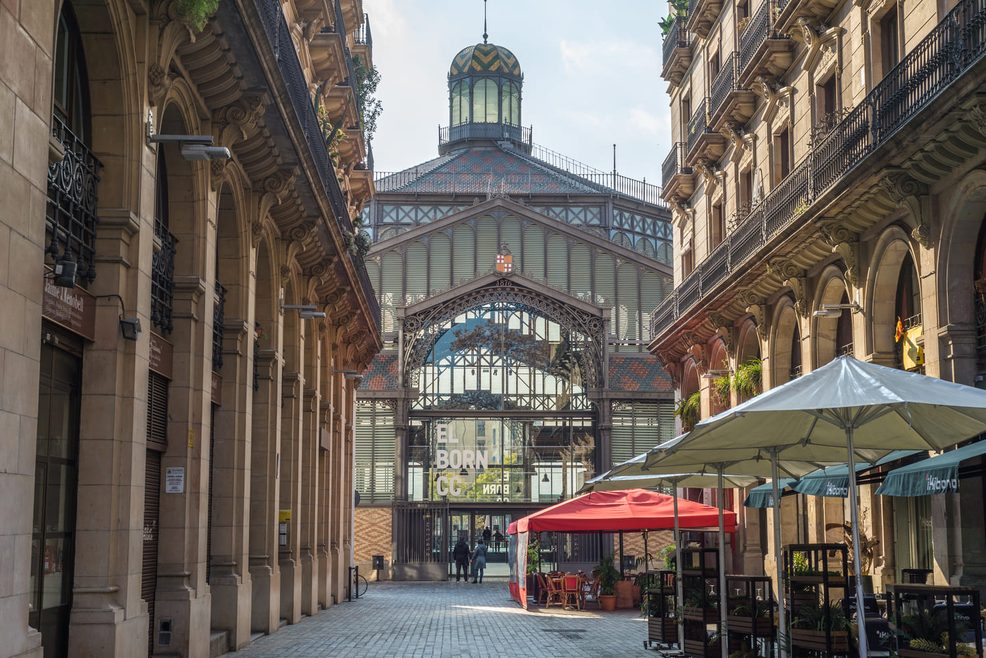
The Barri Gòtic, or Gothic Quarter, is the oldest core of Barcelona and the neighbourhood most first-time visitors picture when they think of staying in the old town. It sits between La Rambla and Via Laietana, around the cathedral and Plaça Sant Jaume, and it is the easiest place to reach the old city on foot. The trade-off is that the City Council’s own noise monitoring has put its western edge, beside La Rambla, among the loudest places in the city at night. Whether the Gòtic works for you depends on which part of it you book.
Why stay in the Barri Gòtic
Few places put more of the old city within a short walk. From Plaça Sant Jaume, Plaça de Catalunya is 11 minutes on foot, and the cathedral, the medieval lanes and La Rambla are all minutes from each other. If you want to do most of your sightseeing without the metro, the Gòtic makes that easy, and it suits travellers who plan to be out late. For the oldest bars, see our guide to bars that have been open for a century.
Where the Gòtic is loudest
A council report on noise in Ciutat Vella (in Catalan) found that the highest weekend-night readings in the district, mostly above 70 decibels in its 2017 monitoring, were on Carrer d’Escudellers and Carrer de l’Arc del Teatre, where the Gòtic meets the Raval. It also singles out the area around Escudellers and Plaça George Orwell as combining the highest noise levels with some of the weakest-built buildings in the city, and therefore poor sound insulation.
The council said in 2023 that shorter terrace hours had cut night noise by up to 3.5 decibels in Plaça George Orwell, though from a high starting point, but it later withdrew the measure over procedural flaws. Its 2024 noise plan for Ciutat Vella (in Catalan) still lists Plaça Reial and its surroundings, and La Rambla, among the most acoustically stressed areas in the district. Because the loudest weekend nights are beside La Rambla, distance from the Rambla is the variable that counts: the further east you are, towards the cathedral and Via Laietana, the better your odds of a quiet night.
Is the Barri Gòtic safe?
For most visitors the risk is theft, not violence. Barcelona recorded about 239 thefts a day in 2025, down from about 258 in 2024 and the lowest figure since 2015, according to the figures the Mossos d’Esquadra and the Guàrdia Urbana presented in February 2026. Those are citywide numbers, not specific to the Gòtic, but they show that theft happens mostly in shops and other businesses (40%), on the street (36%) and on public transport (20%), and that most violent cases are bag-snatchings. In practice, keep your phone off café tables and your bag zipped and in front of you on La Rambla and in crowded lanes.
The downsides of staying in the Barri Gòtic
- Night noise on the Rambla side, as above.
- Crowds. The lanes around the cathedral and La Rambla are busy for much of the day.
- Arrival with luggage. Many streets are narrow or pedestrian, so a taxi may not reach your door.
Where to stay in the Barri Gòtic
Choose by distance from La Rambla, Escudellers and Plaça Reial, and ask whether there is a lift and where a taxi can drop you. If you want the Gòtic’s walkability with fewer late-night crowds, El Born, covered above, is the nearest alternative, just across Via Laietana.
3. Dreta de l’Eixample (Passeig de Gràcia): modernist Barcelona and calmer nights
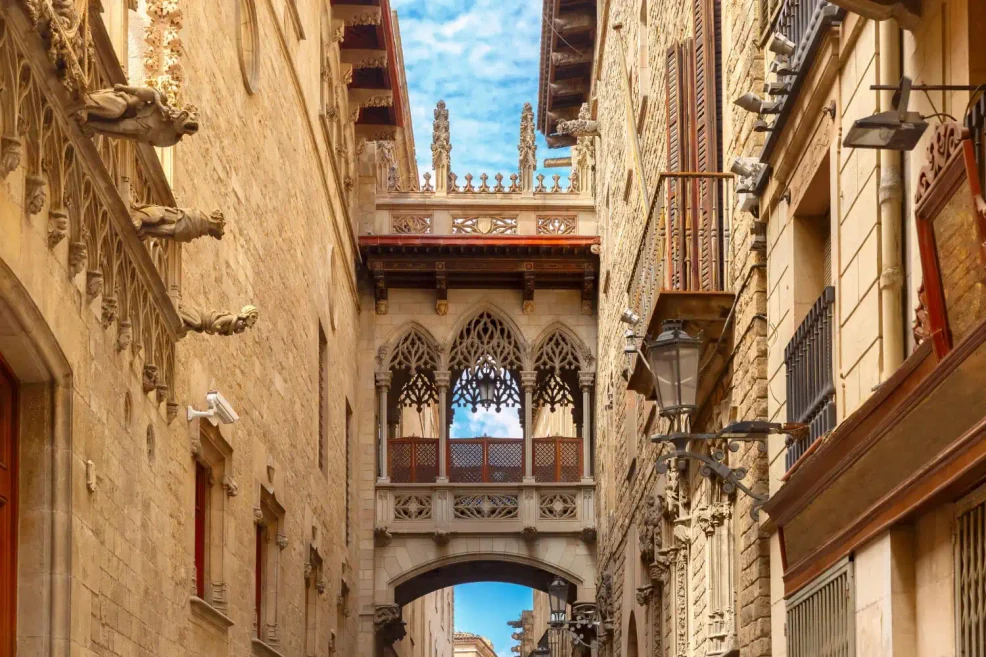
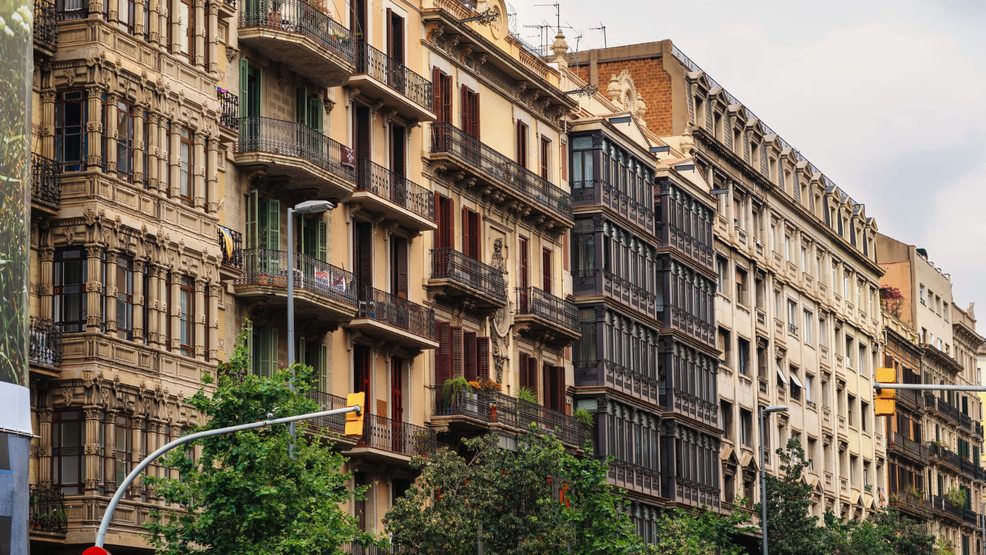
The Dreta de l’Eixample is the right-hand half of the grid of wide, straight streets laid out north of the old town in the 19th century. It begins at Plaça de Catalunya and is organised around Passeig de Gràcia, with Casa Batlló and La Pedrera among its landmarks, and locals draw the line between the Dreta and the Esquerra at Carrer de Balmes. It is the opposite of the Gòtic in how it feels: wide, orderly and commercial rather than medieval and late-night.
Who the Dreta de l’Eixample suits
Travellers who want a lift, wide pavements and modernist architecture on the doorstep: couples marking an occasion, second-time visitors who have already done the old town, business travellers, and anyone arriving with heavy bags who dreads cobbled lanes. Passeig de Gràcia station is on three metro lines (L2, L3 and L4), so most of the city is easy to reach.
What the area is like
Passeig de Gràcia is the spine of the neighbourhood, laid out in Cerdà’s plan as an avenue 60 metres wide (source in Catalan). Its best-known block, the Manzana de la Discòrdia, holds three rival modernist houses side by side: Casa Lleó Morera, Casa Amatller and Casa Batlló. A few blocks further up is Gaudí’s La Pedrera, and the wrought-iron street lamps by Pere Falqués, dating from 1906, run the length of the avenue. Our guides to every Gaudí building in the city and to Barcelona’s modernist architecture help you plan it.
What the nights are like
Here the kind of noise changes more than the amount. The council’s own noise study (in Catalan) finds that Ciutat Vella has the largest share of residents exposed to nightlife noise, while the Eixample has the most residents exposed to traffic noise. Nightlife noise is intermittent and peaks on Friday and Saturday nights; traffic noise is steadier. So in the Dreta you are trading the bar crowds of the old town for traffic, and the calmer night depends on the room, not on the neighbourhood. Ask for a room facing an inner courtyard rather than the street, and check the glazing.
The downsides of staying in the Dreta de l’Eixample
- Traffic noise in street-facing rooms and near the main avenues.
- Less old-world atmosphere. The blocks are handsome but uniform; the lanes, squares and small bars of the old town are a walk or a metro ride away.
Where to stay in the Dreta de l’Eixample
Prioritise a lift, an interior-facing room and, in summer, air conditioning.
If what you want is modernist architecture by day and old-town streets by night, you do not have to choose. From our door in Sant Pere, Urquinaona station is seven minutes on foot, and Passeig de Gràcia is one stop away on the L4.
4. Gràcia: a village that is not in the centre
Gràcia was an independent town until Barcelona absorbed it in the late 19th century, and it still feels like one: low buildings, narrow lanes and a string of small squares where life happens outdoors. It is also the neighbourhood visitors most often call their favourite, with one correction that rarely gets made: it is not central. From Plaça de la Vila de Gràcia, Plaça de Catalunya is 25 minutes on foot, so you will be using the metro every day.
Who Gràcia suits
Second-time visitors, travellers staying a week or more, and anyone who would rather live in a neighbourhood than use it as a sightseeing base. The metro is good: the L3 (Fontana, Diagonal, Lesseps), the L4 (Joanic, Verdaguer) and the L5 (Diagonal, Verdaguer) all serve it, and Gaudí’s first major house, Casa Vicens, is here. For a first visit of three nights, the daily commute costs more than the atmosphere gives back.
What the nights are like
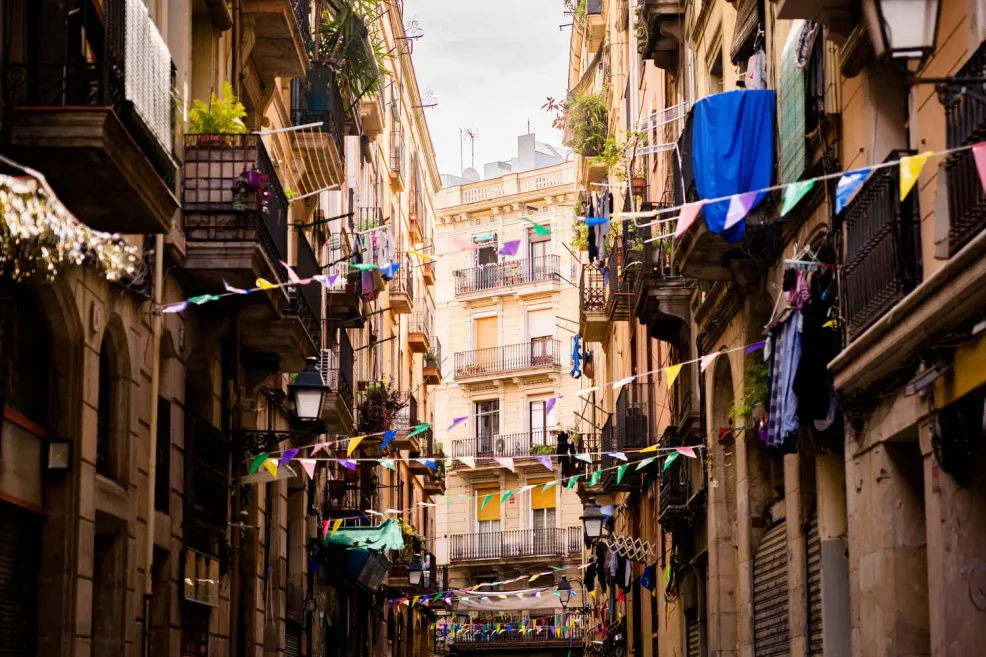
The evening life is in the squares: Plaça del Sol, Plaça de la Virreina and Plaça de la Vila de Gràcia fill with terraces. In October 2022 the council made terraces on Plaça del Sol and Plaça de la Revolució close an hour earlier and said noise around the squares fell by between 1 and 2.5 decibels, but a court overturned the Plaça del Sol restriction in 2025. A room overlooking a square will be lively on a warm night. Each August the Festa Major de Gràcia takes over the neighbourhood for a week, with more than 20 streets and squares decorated and concerts at night. It is a highlight if you are there for it, and a week to avoid if you are not.
The downsides of staying in Gràcia
- Distance. 25 minutes on foot to Plaça de Catalunya.
- Festa Major week. Mid-August brings crowds and late-night noise.
- Square-facing rooms. Terrace noise on summer evenings.
Where to stay in Gràcia
Streets off the main squares are quieter than rooms facing them. If you only want to see Gràcia for an evening, it is easy from the old town: the L4 from Urquinaona, seven minutes’ walk from our door, reaches Joanic and Verdaguer on the edge of the neighbourhood.
5. El Raval: the one that splits opinion
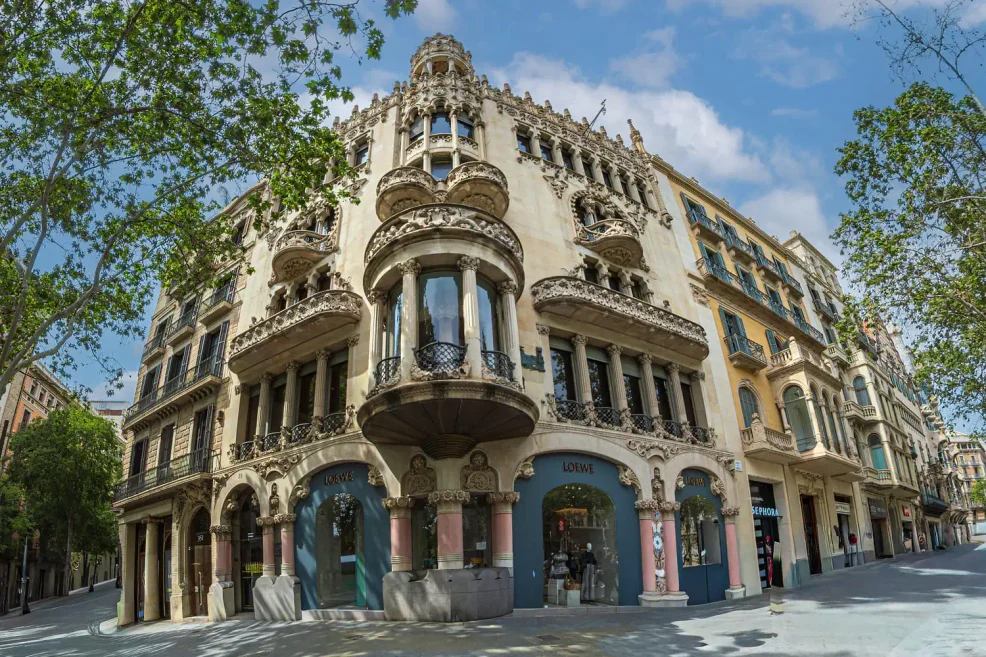
El Raval lies across La Rambla from the Gòtic, and it is the most multicultural, creative and contested part of the old town. It has MACBA, the CCCB and the Filmoteca, and some of the most vivid street life in the city. It is also where the council’s and the police’s attention is most concentrated.
Who El Raval suits
Culturally curious travellers who prefer a lived-in, mixed neighbourhood to a polished one, and who want to be close to MACBA’s galleries and the independent cafés around it. MACBA is 10 minutes on foot from Plaça de Catalunya, and our guide to discovering El Raval covers what to see. It is a poor fit for anyone who wants a quiet, polished stay.
The two Ravals
The upper Raval, around MACBA and the CCCB, is generally the gentler end, but it has its own night-noise hotspots. The council has treated Plaça dels Àngels and Carrer de Joaquim Costa as high-noise zones and reported that night noise fell by more than 2 decibels around Joaquim Costa after terrace hours were cut, before withdrawing that measure in 2023. The lower Raval, towards the port around Rambla del Raval and Carrer d’en Robador, is where police presence is heaviest. In June 2026 the Mossos d’Esquadra and the Guàrdia Urbana reinforced patrols on Rambla del Raval after two mass brawls in two days.
The downsides of staying in El Raval
- Night noise around Plaça dels Àngels and Carrer de Joaquim Costa.
- Street disorder in the lower Raval, with a visible police presence.
- Care after dark. Stick to busy, well-lit streets late at night.
Where to stay in El Raval
A first-time visitor will usually be more comfortable in the northern blocks near MACBA than in the lower Raval, and further from Plaça dels Àngels if noise matters. If you want the Raval’s museums and bars without sleeping there, it is an easy visit by day from anywhere in the old town.
6. Barceloneta: the beach trade-off
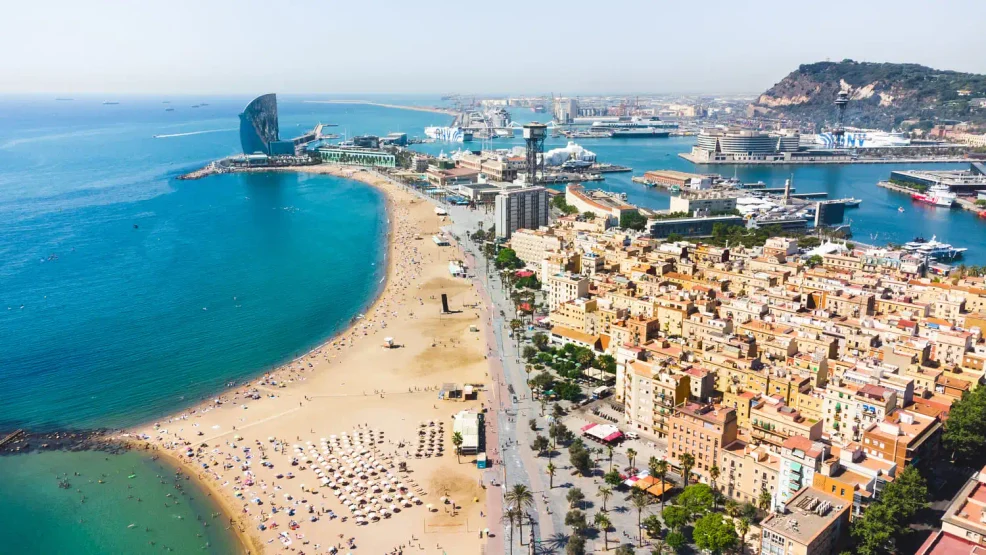
Barceloneta is the seafront neighbourhood at the foot of the old city, officially one of the four neighbourhoods of Ciutat Vella, and the one you choose for the sea. The sand is minutes away, while the old town’s sights are a long walk or a short metro ride back. It works best in summer and is at its thinnest in winter.
Who Barceloneta suits
Summer visitors who want the beach at the centre of the trip, and who are happy to treat the old town as a day out. The L4 metro makes that easy: Barceloneta station is one stop from Jaume I. For the calmer beaches further along the coast, our guide to Barcelona’s beaches covers Bogatell, Nova Icària and more.
What the nights are like
The picture is mixed. In the council’s 2017 monitoring, the sensor on Carrer de Sant Carles recorded the lowest night-time noise of any Ciutat Vella neighbourhood (in Catalan), with levels falling steadily through the night. That was one measuring point, though, and in 2023 the council named Carrer de Miquel Pedrola i Alegre as one of the streets where it was drawing up night-noise plans. So the noise is local: terraces and street activity around the seafront and that street, not the whole neighbourhood.
The downsides of staying in Barceloneta
- Distance. From our door in Sant Pere, the beach is a 25-minute walk, which is a fair guide to how far it is from the old town’s sights.
- Summer crowds. The beach and seafront are at their busiest in July and August.
- Beach theft. A 2022 police security plan named the beaches among the hotspots, so never leave bags unattended on the sand.
Where to stay in Barceloneta
Check the street before booking and avoid the blocks around Carrer de Miquel Pedrola i Alegre if noise matters. If beach days are the point but you would rather sleep in the old town, from our door Jaume I is nine minutes on foot, and Barceloneta is one stop on the L4.
7. Poble Sec: a local-feeling base for pintxos and Montjuïc
Poble Sec sits at the foot of Montjuïc, across Avinguda del Paral·lel from the Raval, and it is often the neighbourhood travellers discover once they have done the old town. It is built around Carrer de Blai, a pedestrian street of pintxo bars, and it puts Montjuïc’s parks and viewpoints on your doorstep. What it is not is central: measured on Google Maps, Plaça de Catalunya is 23 minutes on foot from the Paral·lel end of Carrer de Blai.
Who Poble Sec suits
Second-time visitors, food-led travellers and walkers who want a neighbourhood with a local feel and quick access to the hill. Paral·lel station (L2 and L3) is the hub, and the Montjuïc funicular starts on Avinguda del Paral·lel.
What the nights are like
Carrer de Blai is a street to eat on, not to sleep above, at weekends. In March 2026 the Catalan high court ordered the council to drop the rule that made the terraces on Carrer de Blai and Carrer de Blesa close an hour earlier than the rest of the city, according to betevé (in Catalan). They can now stay open until midnight from Sunday to Thursday and until 1 am on Fridays, Saturdays and the eves of holidays, and about 39 terraces are affected. The council also analysed night noise on Carrer de Nou de la Rambla between Blai and Blesa. Rooms away from Blai, Blesa and Avinguda del Paral·lel will be quieter.
The downsides of staying in Poble Sec
- Distance. 23 minutes on foot to Plaça de Catalunya.
- Terrace noise on Carrer de Blai and Carrer de Blesa, now with longer opening hours.
- Slopes. The streets climb towards Montjuïc, which matters with luggage.
Where to stay in Poble Sec
Look for a room off Carrer de Blai rather than on it. And if it is Montjuïc you want, you do not need to sleep here: Paral·lel station and the funicular are an easy trip from anywhere in the old town.
8. Poblenou: where the city is moving
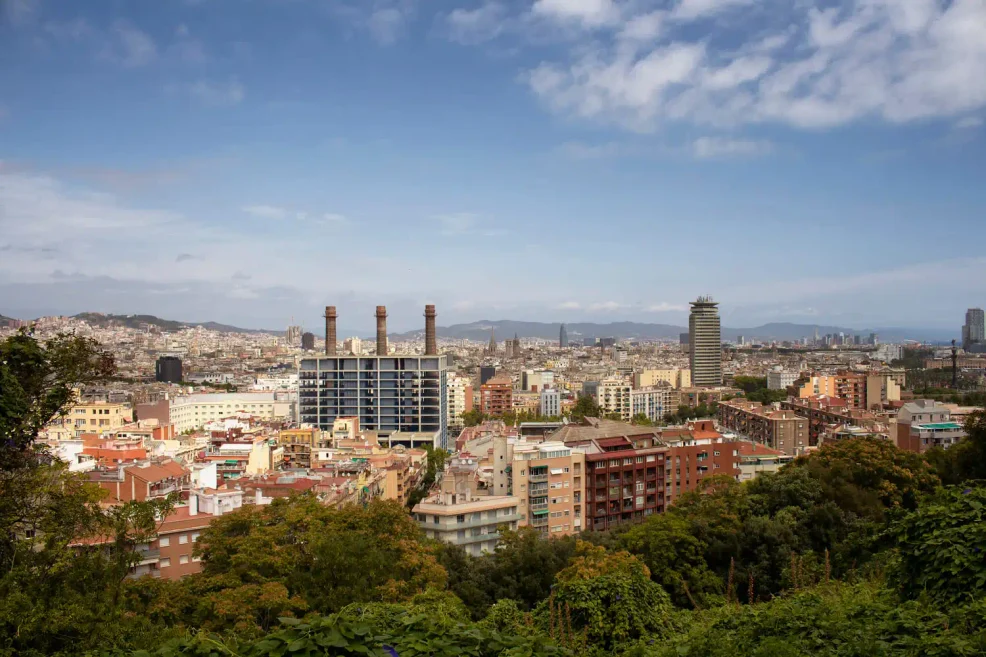
Poblenou is the former industrial neighbourhood on the city’s eastern seafront, between Avinguda Diagonal and the Mediterranean. Its old factories now sit beside the 22@ business district, and its tree-lined Rambla and its beaches are where local life happens. It is a long way from the old town: measured on Google Maps, Rambla del Poblenou is 50 minutes on foot from Plaça de Catalunya. It can be one of the calmest, most residential bases in the city, provided you avoid one particular part of it.
Who Poblenou suits
Stays of a week or longer, travellers who want beach and city in one trip, cyclists, and anyone who prefers a residential feel to a sightseeing base. The L4 metro runs through it (Llacuna and Poblenou stations), and the coast is flat: our guide to cycling in Barcelona describes an easy 10 km coastal route that passes through. Bogatell and Mar Bella are the beaches closest to the Rambla.
What the nights are like
One of the city’s best-known nightlife problem areas is in Poblenou: the “leisure triangle” of El Parc i la Llacuna del Poblenou, between Avinguda Meridiana and the streets of Tànger, Llacuna, Pallars, Badajoz, Pujades and Marina. In July 2022 the council banned food shops there from opening between 10 pm and 7 am, from Wednesday to Sunday, to curb street drinking and noise, and it later named the area among those getting night-noise plans. Check where a room sits relative to that triangle before booking.
The downsides of staying in Poblenou
- Distance. 50 minutes on foot to Plaça de Catalunya, so the L4 is part of every sightseeing day.
- The leisure triangle. Street drinking and night noise in one defined area.
- Few old-town sights nearby.
Where to stay in Poblenou
Look near the Rambla or the seafront rather than around Pallars, Llacuna and Pujades.
Where not to stay in Barcelona: four bookings we would think twice about
There is no neighbourhood in Barcelona you cannot visit, but there are a few bookings we would think twice about. In each case the reason is logistics, not snobbery.
Right on La Rambla
Is La Rambla a good place to stay? By day it is fine to walk. At night, the council’s monitoring recorded the loudest weekend nights in Ciutat Vella (in Catalan) beside La Rambla, and its 2024 noise plan (in Catalan) still lists the avenue among the most stressed areas. Sleep a few streets away and walk back.
A hotel in another town, sold as Barcelona
Some listings with “Barcelona” in the name are in neighbouring towns such as L’Hospitalet de Llobregat, El Prat or Sant Adrià de Besòs. Check the municipality in the address, and the journey to Plaça de Catalunya, before you book.
A tourist flat without a licence number
Barcelona plans not to renew its roughly 10,000 tourist-flat licences when they expire in November 2028. A legal flat has a licence number. Ask the host for it, and check it with the city council, before you pay.
A base chosen for one landmark
The Sagrada Família is a metro ride on the L2 or L5 from almost anywhere in the centre. Most of your trip will be spent elsewhere, so choose the neighbourhood for the other hours, not for the basilica.
Best area to stay in Barcelona for every type of trip
The best places to stay in Barcelona depend on who is travelling and what the trip is for. These are our picks by type of traveller; the neighbourhood sections above give the detail and the catch.
Where to stay in Barcelona for the first time
El Born and Sant Pere, or the Dreta de l’Eixample. The first gives you old-city streets and the cathedral, the Picasso Museum and the Palau de la Música on foot; the second gives you modernist architecture, lifts and calmer nights. Our tips for a first visit to Barcelona cover the rest of the planning.
Best area to stay in Barcelona for couples
El Born and Sant Pere for atmosphere, the Dreta de l’Eixample for elegance. Choose a room away from the Passeig del Born if you want quiet. Our guide to plans for couples in Barcelona has ideas for the days.
Where to stay in Barcelona for nightlife
El Born, the Barri Gòtic and Poble Sec are where the evening happens, and they are also the loudest places to sleep. If you want a late night and a good sleep, stay a street or two back from the bars, or in the Dreta, and walk or take a short taxi to the action.
Where to stay in Barcelona with kids
The Dreta de l’Eixample, for lifts, wide pavements and easy metro links, or Poblenou, for beaches and a flat, residential feel. We are an adults-only hotel, so for families we would rather point you to the right area than pretend to be the right hotel. Our guide to Barcelona with kids helps with the days.
Where to stay in Barcelona near the beach
Barceloneta if you want the sand on your doorstep and don’t mind summer crowds, or Poblenou for calmer beaches and a quieter neighbourhood.
Where to stay in Barcelona on a budget
We don’t quote prices by area: they change by the week, and we found no reliable neighbourhood data. Compare your own dates, count the cost of getting around if you stay away from the centre, and add the tourist tax (below) to every room rate.
Where to stay in Barcelona for a week or longer
Gràcia, Poblenou or Poble Sec. All three trade walking distance for a residential feel, and on a longer stay the daily metro ride matters less.
Barcelona tourist tax: what to add to the room rate
Whichever neighbourhood you choose, add Barcelona’s tourist tax to the room rate. It is charged per person, per night. Since 1 April 2026, Catalonia’s tax agency publishes a higher regional tariff for the city (in Catalan), and the city council’s ordinance (in Catalan) adds a municipal surcharge of €5.
According to Catalan News, the total in the city is now €12 per person per night in a five-star hotel, €8.40 in a four-star, €9.50 in a tourist apartment, €7 in most other categories and €6 in hostels. The surcharge is due to rise by €1 a year until it reaches €8 in 2029, which would put luxury hotels at €15. Your accommodation collects the tax, so check whether the price you are shown already includes it. For a hotel like ours, in the €7 category, 10% VAT is added to the tax, so our booking page shows €7.70 per person per night.
Where we would stay: Musik Boutique Hotel, adults only, in El Born
We have described every neighbourhood by who it suits and who it doesn’t, so here is our own hotel in the same terms. Musik Boutique Hotel is an adults-only boutique hotel with 23 rooms in an 18th-century building at Carrer de Sant Pere Més Baix 62, and the walking times in the El Born and Sant Pere section are measured from our door. A taxi from the airport takes about 31 minutes by Google Maps’ estimate.
Our rooms differ in ways that matter. The Standard rooms (18 m²) overlook the courtyard, and the Deluxe rooms (20 m²) face the street, with some keeping the original stonework of the building. The Junior Suite is the only room with a private terrace, and the single room has a furnished balcony over the Born. There is a lift. If a quiet night is your priority, ask for a courtyard room.
Every room has an in-room audio system, and the hotel has a 24-hour bar and a breakfast buffet with gluten-free and vegetarian options. We suit couples and solo travellers who want a short city break in the old town. We do not suit everyone: children cannot stay, and if you want a pool, or a kitchen for a long stay, one of the neighbourhoods above will serve you better.