

History of El Born, Barcelona

Although its beginnings were humble and picturesque—it was the site of medieval tournaments and jousts among knights—El Born (Borne in Spanish) has become one of the cultural and social hubs of the city of Barcelona. In this neighborhood, home to the Musik Boutique Hotel, you can feel the city’s history at every turn, while also enjoying the most contemporary and cosmopolitan experiences. While we covered the latter in the Barcelona guide’s article on the best restaurants in El Born, today we want to talk about the former, taking a look at the history of El Born up to the present day. Let’s discover it!
If you’d like to learn more about the area around the hotel, you can also explore things to do in El Born.
What does “El Born” mean in Barcelona?
El Born (Borne in Spanish) is the name given to the squares and venues where medieval tournaments and jousts were held. By extension, the events themselves were also referred to by this name. Since this part of the city—specifically the Passeig del Born—is where these events took place, over the years the name “El Born” came to be applied to that area and its surroundings.
If we take a stroll through other cities in Catalonia and Catalan-speaking regions, we’ll find other “Borns” or “Bornes,” such as the streets of El Born in Igualada or Manresa, or Plaça des Born in Menorca. What all these places have in common is that they are located in areas where medieval jousting tournaments were once held.
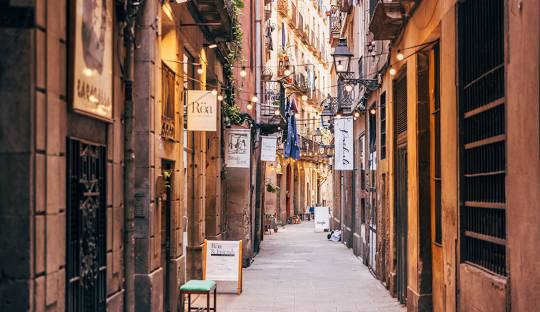
History of the Born Neighborhood in Barcelona
But just because the modern name dates back to the Middle Ages doesn’t mean nothing happened in this area before the jousting tournaments. On the contrary, the history of El Born goes back many centuries. The Born CCM, located in the old El Born market, is one of the neighborhood’s epicenters and a must-see for anyone who wants to experience the history of El Born and Barcelona firsthand. At this site, we can take a true journey through the entire history of this city, from the Roman Empire to the 21st century. That’s why we’ll use it as a reference point to explain the neighborhood’s history, since its very stones reveal everything that has happened and shaped its future.
Roman Period
First of all, it’s important to understand where this neighborhood is located. Although today it’s one of the most central areas of Barcelona, if we consider the location of Roman Barcino or the medieval walled city, we see that it lies just outside the city walls. This means it was very close to the city but wasn’t yet part of it—in other words, the perfect spot for a cemetery. That’s why the first remains found in El Born were Roman burials. A large Roman necropolis has been discovered here, the epicenter of which lies beneath Santa María del Mar. If you’re interested in continuing to explore the city’s past, we recommend you also visit our selection of must-see museums in Barcelona.
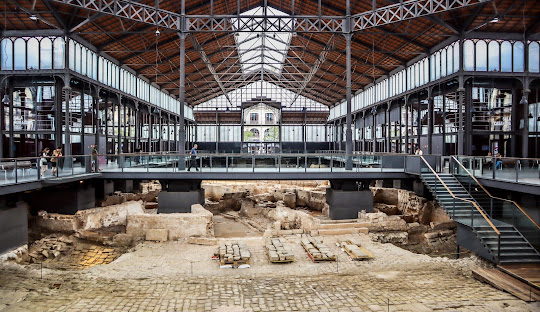
Islamic Remains
Without leaving the necropolis, a large number of burials conducted in accordance with Islamic rites have also been discovered. However, since carbon-14 dating—a method for determining the exact age of an artifact or set of bones—has not yet been performed, we cannot be certain whether these burials took place during the Islamic occupation of Barcelona or whether they are of Muslims who lived in Barcelona. In any case, these remains date back to before the 13th century.
13th Century: The Birth of El Born and La Ribera
Over the course of centuries, a number of buildings began to be erected, structures that gradually expanded in the vicinity of the Church of Santa Maria de les Arenes. As early as the 10th century, we have documents that mention buildings in this part of the city. However, it was not until the 13th century that this area of the city can be said to have been developed. It was precisely in the 10th century that the Rec Comtal was built—a hydraulic project that proved essential for the emergence of the neighborhood we know today and which, over the centuries, served as the city’s commercial center. This is how the neighborhood known as La Ribera took shape on either side of the Rec Comtal.
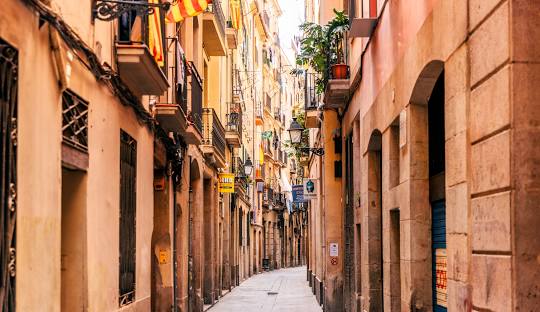
During the 13th and 14th centuries, the entire area gradually became urbanized, a process that was consolidated following the construction of the Convent of Sant Agustí and the section of the city wall between Santa Maria del Mar, Santa Clara, and Portal Nou. It was precisely the construction of this section of the city wall that definitively incorporated this neighborhood into the city of Barcelona. El Born was no longer a place outside the city walls where burials took place, but rather the most active and vibrant area of medieval Barcelona. By looking at the buildings and streets of El Born, we can get a sense of what those times were like and how the area was built. Unlike other historic areas of the city, such as the Gothic Quarter or the Raval, there were no pre-existing structures that dictated a specific style of construction. That is why the urban layout is regular, with parallel and fairly wide streets. The only exception is the most central part of the Born—the area that developed around the Rec Comtal and follows its contours.
People often refer to the entire urban area of Sant Pere, La Ribera, and Santa Caterina as El Born, which isn’t entirely accurate. El Born (Borne) is a specific part of La Ribera, located around the Basilica of Santa Maria del Mar and bordered by La Barceloneta and Calle Princesa. And if you’d like to continue exploring the city through its architecture, you can also check out our guide to Modernist architecture in Barcelona.
18th Century, the War of the Spanish Succession
The War of the Spanish Succession was a dark chapter in the history of the neighborhood and the city. In this article, we won’t discuss the warring factions or the history behind the war, but rather one of the harshest consequences the city of Barcelona has had to endure: when the victorious side—the Bourbons, who were vying for the throne—decided to destroy the Ribera neighborhood to build a military citadel (what is now the Parc de la Ciutadella). The goal was to have a walled enclosure in the city center from which to monitor any attempt at rebellion and facilitate the deployment of troops.
Between 1716 and 1718, everything up to Blanqueria, Tiradors, Sabateret, Corretger, and Flassaders streets, as well as Plaça del Born and Carrer de Montserrat—one of the most densely populated and prosperous areas of Barcelona at the time—collapsed.
Daily Life and the Spirit of the Born
Taking a stroll through the Born (or Borne) today is a way to experience Barcelona from the inside. Unlike other, more touristy areas, the Born maintains a unique balance between tradition and modernity, between local life and creative energy. Its narrow alleys, artisan workshops, and small squares convey an essence found nowhere else. Whether you approach from the Passeig del Born, arrive from Santa Maria del Mar, or come from the old Borne market, every stroll reveals a new facet of the neighborhood. The blend of history, cuisine, design, and everyday life makes the Born one of the city’s most vibrant areas. It’s a neighborhood to be experienced at a leisurely pace, observing, listening, and letting yourself be carried away. That’s why so many travelers—and locals alike—consider getting lost in the Born one of Barcelona’s greatest pleasures, and believe that the magic of the Born lies precisely in that perfect blend of past and present. Those who want to enjoy the trendiest atmosphere can also discover a curated selection of bars and restaurants in the Born, perfect for continuing to explore the neighborhood.
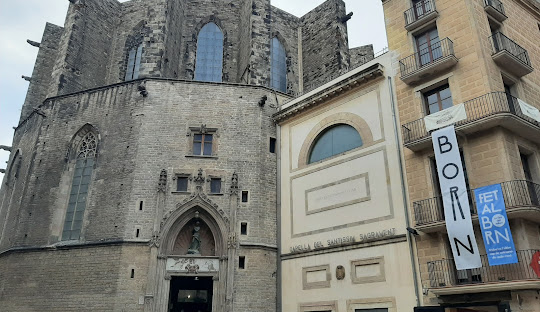
El Born Today
Despite all the misfortunes and setbacks that have plagued this part of Barcelona, the neighborhood’s entrepreneurial and vibrant spirit has consistently prevailed, transcending its historical layers and remaining as strong as ever today. El Born is one of Barcelona’s hidden treasures, with its narrow streets, a history you can feel in every stone, spectacular buildings, a first-rate cultural scene, and a wide variety of bars and restaurants to suit every taste. Furthermore, unlike some areas of the city—such as La Rambla—it has managed to strike the perfect balance between a local, quintessentially Barcelonian way of life and a cosmopolitan atmosphere that caters perfectly to tourists.
If you’re looking to take a getaway to Barcelona and enjoy an authentic experience right in the heart of the city, book your stay now at Musik Boutique Hotel, a romantic hotel in Barcelona where you can explore the city in comfort and with meticulous attention to detail. If you’re looking for unique experiences to complement your visit to El Born, get inspired by our romantic ideas in Barcelona or explore some of the city’s best viewpoints.