Although its beginnings were humble and picturesque—once the site of medieval tournaments and knightly jousts—El Born (known as Borne in Spanish) has become one of Barcelona’s cultural and social epicenters. In this neighborhood, home to Musik Boutique Hotel, you can breathe in the city’s history on every corner while also experiencing its most contemporary and cosmopolitan side. If in our Barcelona guide we previously talked about the best restaurants in El Born, today we turn our attention to the past, taking a journey through the history of El Born up to the present day. Let’s explore it together.
If you’d like to get to know the area around the hotel even better, you can also explore what to do in El Born.
What does “El Born” mean in Barcelona?
The name El Born (Borne in Spanish) originally referred to the open spaces and facilities where medieval weapon tournaments and jousts were held. Over time, the name was also used to refer to the events themselves. Since these competitions took place specifically along Passeig del Born, the surrounding district eventually adopted the name El Born as well.
If you walk through other Catalan-speaking regions, you’ll come across more places called “Born” or “Borne,” such as Carrer del Born in Igualada or Manresa, or Plaça des Born in Menorca. What they all share is a common past: they are located on the very grounds where medieval jousts once took place.
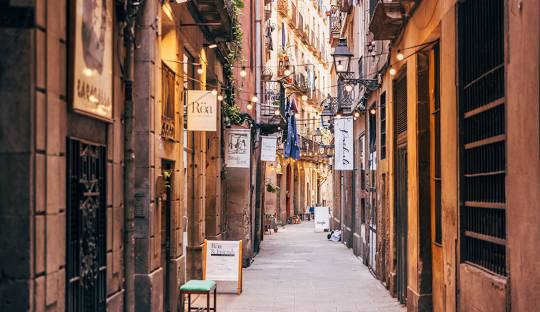
History of the Born district in Barcelona
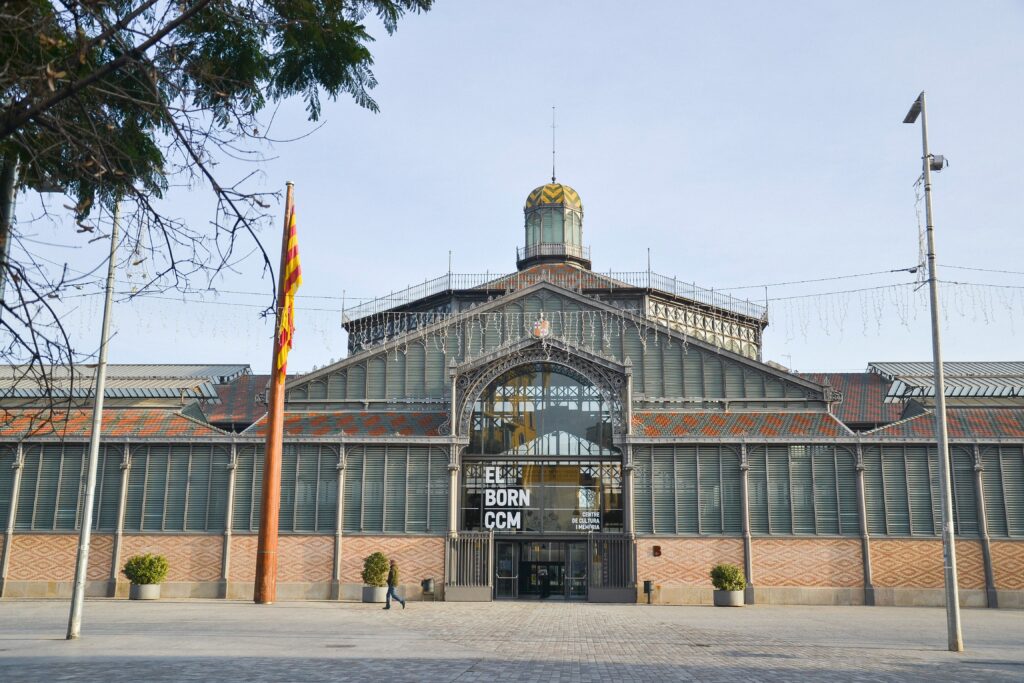
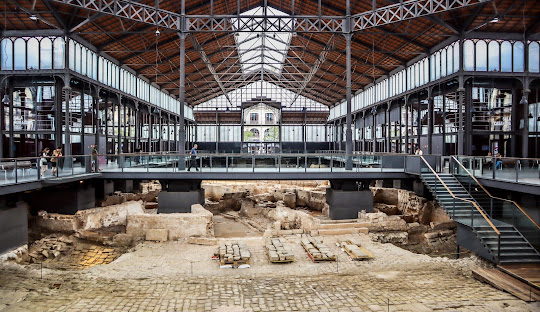
However, the fact that the modern name dates back to the medieval era doesn’t mean nothing existed here before the jousts. On the contrary — the history of El Born stretches back many centuries. The Born CCM, located in the former El Born market building, is one of the cultural epicenters of the neighborhood and an essential stop for anyone wanting to see the history of El Born and Barcelona firsthand. This archaeological site allows you to walk through the city’s past, from the Roman Empire to the 21st century. For this reason, we use it as a guiding thread to explain the evolution of the neighborhood: its stones reveal everything that has shaped its identity.
Roman Era
To understand the origins of this district, it’s essential to consider its location. Although today it sits at the heart of Barcelona, during Roman Barcino and the medieval walled city, this area lay just outside the city walls. That meant it was close to the urban core, but technically not part of it — making it the ideal place for a cemetery. This explains why the first remains found in the Born or Borne were Roman burials. A large necropolis has been uncovered here, centered beneath today’s Santa Maria del Mar.
If you’re interested in continuing your exploration of the city’s past, we also recommend taking a look at our guide to the must-see museums of Barcelona.
Islamic Remains
Continuing within the necropolis area, archaeologists have also uncovered numerous burials that follow Islamic funerary traditions. However, because carbon-14 dating has not yet been carried out — the method used to determine the exact age of bones and artifacts — it’s still unclear whether these graves belong to the period of Islamic rule in Barcelona or to Muslim inhabitants who lived in the city afterward. In any case, these remains clearly date back to before the 13th century.
13th Century: The Birth of El Born and La Ribera
Although documents from the 10th century already mention buildings near the old Church of Santa Maria de les Arenes, it wasn’t until the 13th century that this area began to develop as a true urban district. It was during the 10th century that the Rec Comtal — a crucial hydraulic canal — was built, an essential work that enabled the birth of the neighborhood we know today. Thanks to this canal, the area flourished over the following centuries, becoming Barcelona’s main commercial hub. This is how what was known as the Ribera district emerged on both sides of the Rec Comtal.
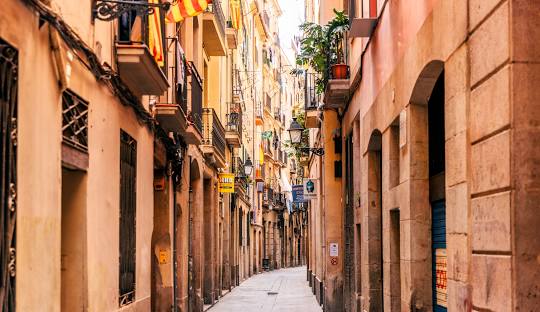
Throughout the 13th and 14th centuries, the entire area continued to grow, especially after the construction of the Convent of Sant Agustí and the section of medieval wall connecting Santa Maria del Mar, Santa Clara and the Portal Nou. It was precisely this new stretch of wall that officially incorporated the neighborhood into the city of Barcelona. El Born was no longer an area outside the walls used for burials — it had become the most vibrant and active part of medieval Barcelona.
Today, by looking at the buildings and streets of El Born, we can still imagine those times. Unlike other ancient districts such as the Gothic Quarter or El Raval, this area had no pre-existing structures conditioning its layout. For that reason, the urban grid is quite regular, with wider, parallel streets. The only exception is the central core of El Born, which grew around the Rec Comtal and adapted to its winding path.
It’s common to hear people refer to the whole area of Sant Pere, La Ribera and Santa Caterina as El Born, but this isn’t entirely accurate. El Born (or Borne) is actually a specific part of La Ribera — the area around the Basilica of Santa Maria del Mar, bordered by La Barceloneta and Carrer Princesa. And if you’d like to keep exploring the city through its architecture, you can also dive into our guide on modernist architecture in Barcelona.
18th Century: The War of Succession
The War of Succession marked one of the darkest chapters in the history of the neighborhood and the entire city. This article won’t delve into the contenders or the political motives behind the conflict, but rather into one of its most devastating consequences for Barcelona: when the victorious Bourbon dynasty —aspiring to the Spanish throne— decided to demolish the Ribera district to build a military citadel (what is now Parc de la Ciutadella). The goal was clear: to create a fortified enclosure in the heart of the city that would allow them to monitor any attempt at rebellion and to move troops out quickly if needed.
Between 1716 and 1718, everything between the streets of Blanqueria, Tiradors, Sabateret, Corretger and Flassaders, the old Plaça del Born, and Carrer Montserrat was razed to the ground — one of the most densely populated and prosperous areas of Barcelona at the time.
Daily Life and the Spirit of El Born
Walking through El Born (or Borne) today is one of the most authentic ways to experience Barcelona from within. Unlike more tourist-saturated areas, El Born preserves a unique balance between tradition and modernity, between local life and creative energy. Its narrow alleys, artisan workshops and intimate little squares give the neighborhood a soul that’s impossible to replicate elsewhere.
Whether you enter through Passeig del Born, approach from Santa Maria del Mar or wander in from the historic El Born market building, each route reveals a different facet of the neighborhood. The blend of history, gastronomy, design and daily life makes El Born one of the city’s most vibrant cultural spaces. It’s a place meant to be enjoyed slowly — observing, listening, and letting yourself be carried by its rhythm.
That’s why so many travelers —and locals alike— consider getting lost in El Born one of Barcelona’s greatest pleasures. The charm of Borne lies precisely in that perfect fusion of past and present. And for those who want to experience its modern side, you can also explore a curated selection of bars and restaurants in El Born — ideal for continuing your journey through the neighborhood.
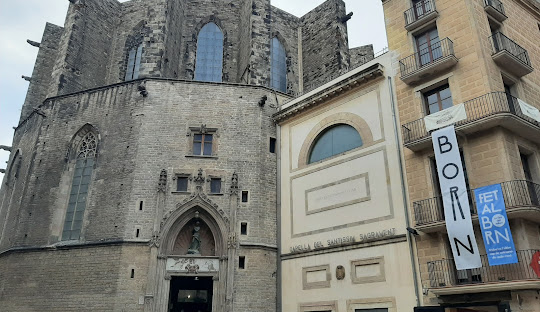
El Born Today
Despite the hardships and historical upheavals this area has endured, the entrepreneurial, vibrant spirit of the neighborhood has prevailed time and time again. Today, El Born stands as one of Barcelona’s true hidden gems: narrow medieval streets, a palpable sense of history in every stone, stunning architectural landmarks, top-tier cultural offerings, and an impressive variety of bars and restaurants for every taste.
What sets it apart from areas like La Rambla is its ability to maintain the perfect balance between authentic local life and a cosmopolitan, welcoming atmosphere — all while offering visitors exceptional cultural richness.
If you’re planning a getaway to Barcelona and want to experience the city from its very heart, book your stay at Musik Boutique Hotel, a romantic hotel in Barcelona where you can enjoy comfort, attention to detail, and a privileged location. And if you’re looking for unique activities to complement your visit to El Born, you can find inspiration in our guide to romantic plans in Barcelona or explore some of the best viewpoints in the city.