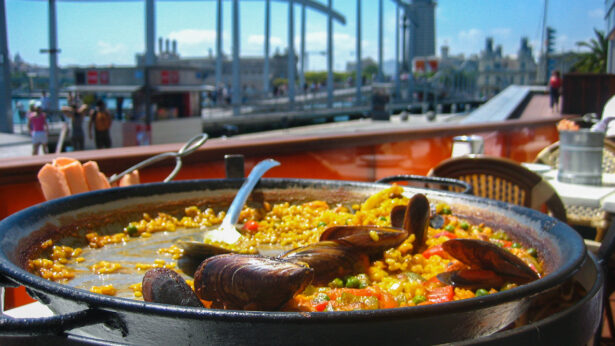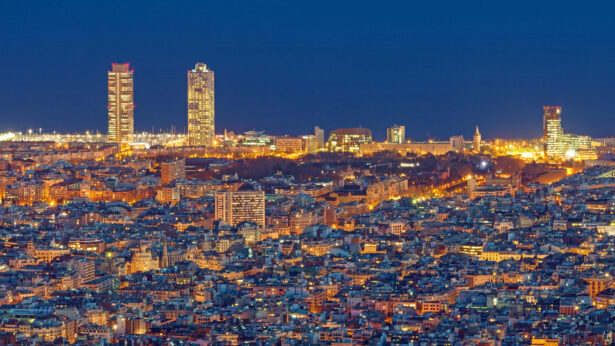
Barcelona is a city experienced through the senses. Its architecture, creative energy and Mediterranean identity make it a destination that inspires from the very first moment. At Musik Boutique Hotel, we believe that discovering the city goes far beyond visiting iconic landmarks. That is why our Barcelona guide was created with a clear purpose: to help you connect with the cultural and artistic essence that defines the city. For those who wish to continue exploring this creative side, our guide to outdoor art offers a complementary perspective on the artistic expression found throughout Barcelona’s streets.
Among all the creative expressions that have shaped Barcelona, few are as influential and instantly recognisable as the works of Antoni Gaudí. His legacy not only transforms the urban landscape but also invites visitors to see the city from a different perspective, understanding architecture as an emotional experience. And since every cultural journey is best enjoyed alongside local cuisine, we also recommend discovering our selection of the best tapas in El Born, the perfect way to round off a day spent exploring the city. From our boutique hotel in the heart of Barcelona, we propose a carefully curated route to discover both the most iconic creations and the lesser-known works of this universal genius.
An architectural walk through Gaudí’s works
Talking about Barcelona inevitably means talking about Antoni Gaudí. His vision broke away from the traditional architectural conventions of his time and gave rise to a distinctive language, organic and deeply symbolic. Inspired by nature, spirituality and craftsmanship, Gaudí conceived buildings that today form part of the city’s collective imagination.
The structures designed by Antoni Gaudí are not limited to static monuments. They are living spaces, created to be explored, observed and felt. Every façade, every mosaic and every structural detail responds to both an aesthetic and a functional intention. In this guide, we bring together all of his creations in Barcelona, from the most monumental to those urban interventions that often go unnoticed, yet complete his creative universe.
The Sagrada Familia
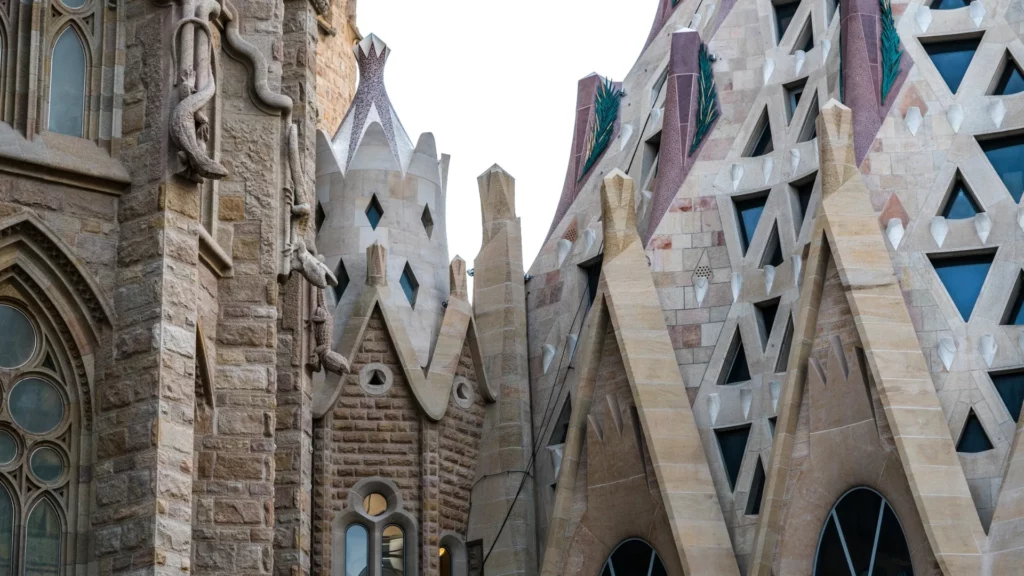
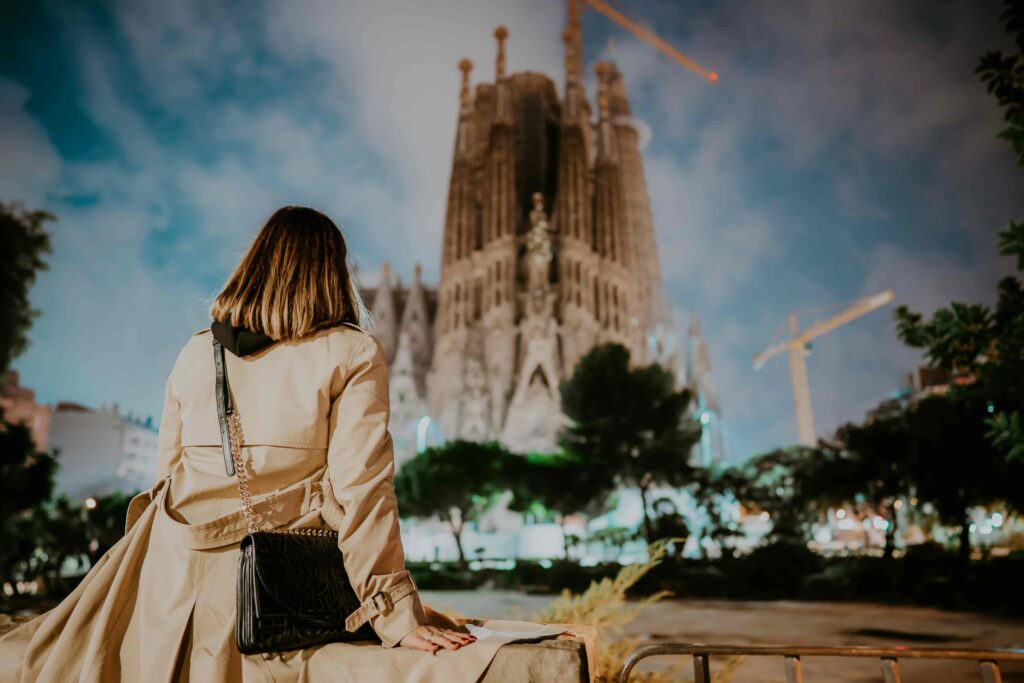
The Sagrada Familia is Antoni Gaudí’s most iconic work and Barcelona’s architectural symbol. This expiatory temple, still under construction, represents the culmination of his artistic and spiritual thinking. Each of its façades tells a different episode from the life of Christ, combining sculpture, architecture and religious symbolism. For those travelling as a family, the visit can easily be integrated into a broader itinerary, such as the one we suggest in our article Barcelona with kids.
Beyond its monumental scale, the Sagrada Familia is one of Antoni Gaudí’s works of art that best reflects his obsession with light and natural geometry. The interior impresses with its verticality and the way coloured light filters through the stained glass, creating an almost mystical atmosphere that shifts throughout the day.
Park Güell
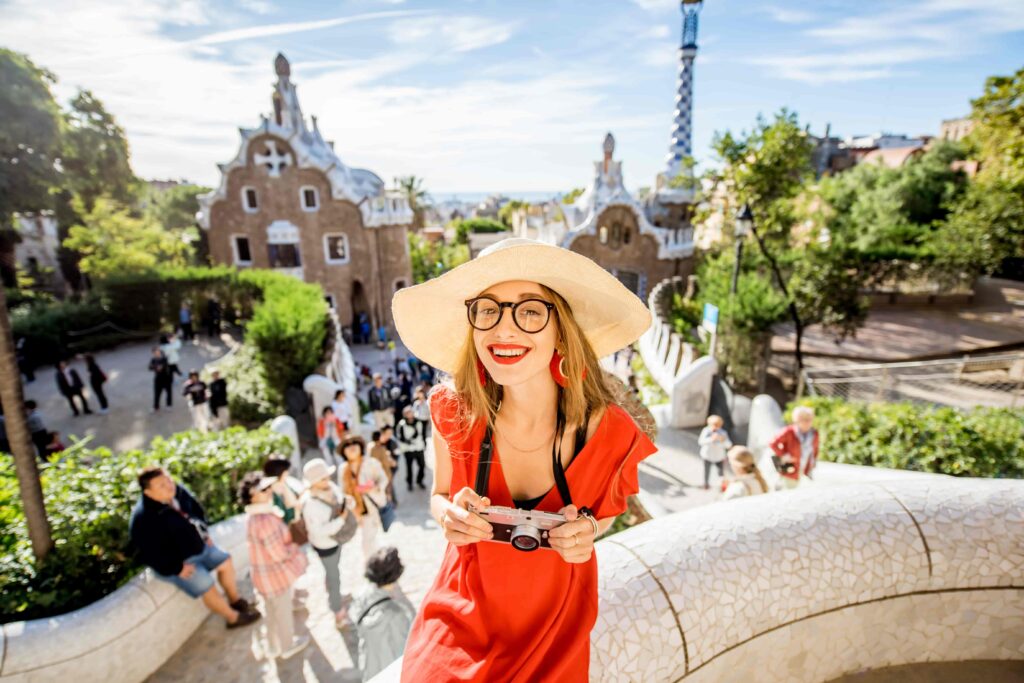
Park Güell is one of the city’s most recognisable and visited creations. Originally conceived as a private residential development, it ultimately became a public space where architecture and landscape merge masterfully. Here, Antoni Gaudí explored his connection with nature to the fullest, integrating architectural structures into the natural environment.
The famous undulating bench, the trencadís mosaics and the columns reminiscent of tree trunks make this park one of the most photogenic and representative structures designed by Antoni Gaudí. Visiting it is to understand how art can engage in dialogue with the landscape without imposing itself on it.
Casa Batlló
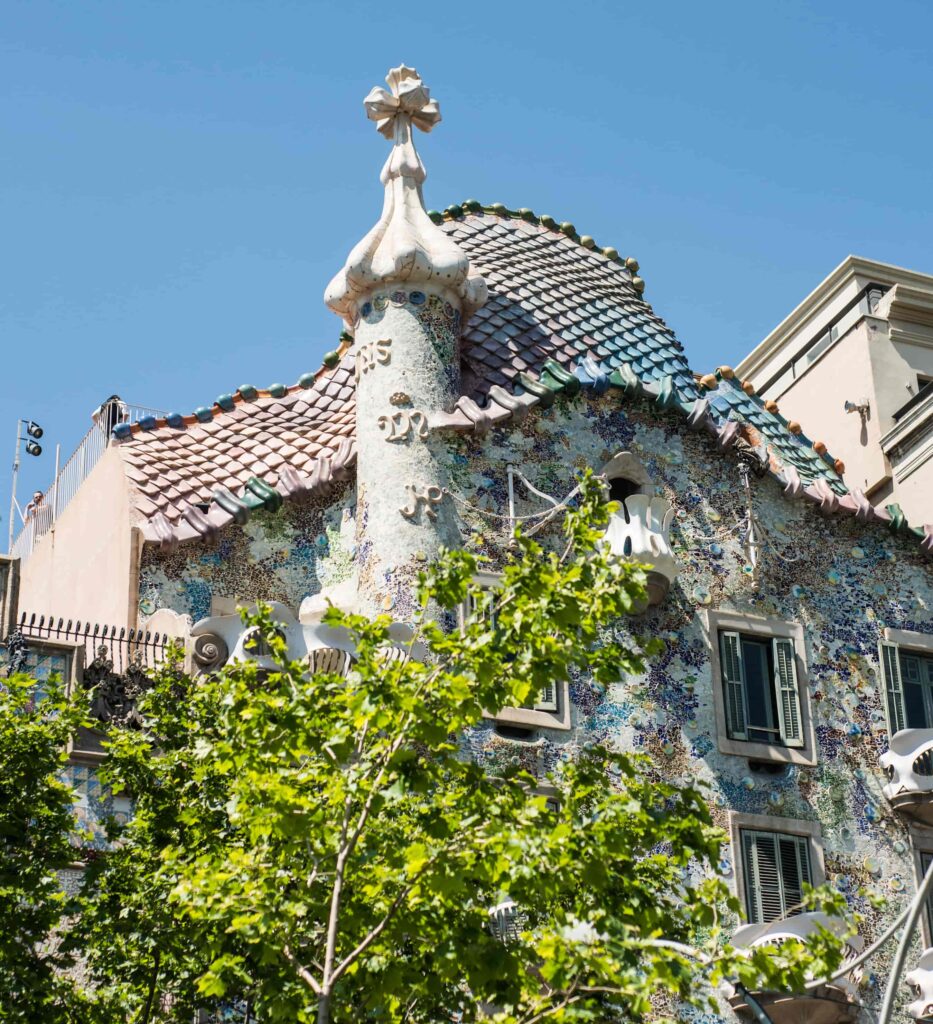
Located on Passeig de Gràcia, Casa Batlló is one of Antoni Gaudí’s works of art that best showcases his most imaginative side. Its façade, with undulating forms and shifting colours, evokes the movement of the sea and the skin of a fantastical creature. Nothing in this building is accidental.
Inside, Antoni Gaudí designed every element with both functionality and aesthetics in mind. Natural ventilation, the flow of light and the use of noble materials turn the visit into a fully immersive sensory experience. Casa Batlló is a perfect example of how the structures designed by Antoni Gaudí combine beauty and efficiency.
Casa Milà (La Pedrera)
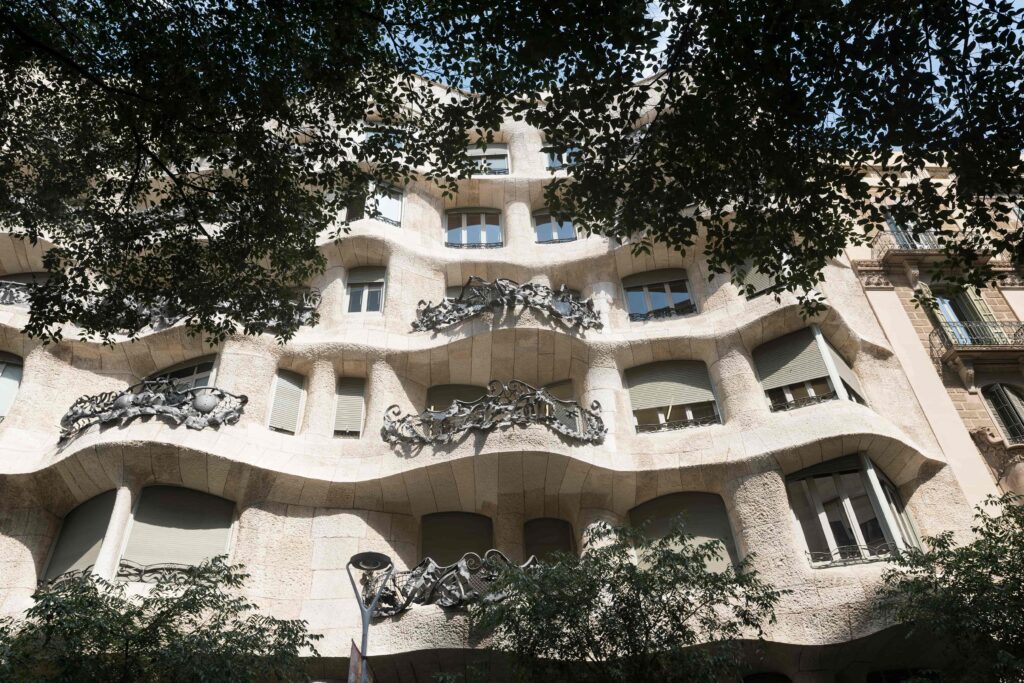
Casa Milà, popularly known as La Pedrera, breaks with any preconceived idea of a residential building. Its wavy stone façade looks as though it has been carved by the wind, while the rooftop features chimneys that have become true urban sculptures.
This work marks a moment of maturity in Antoni Gaudí’s career. Here, Antoni Gaudí’s works of art reveal themselves through innovative structural solutions, such as the absence of load-bearing walls, which allowed for a flexible layout of interior spaces—something revolutionary for its time.
Palau Güell
Palau Güell was one of Antoni Gaudí’s first major commissions and a clear example of his ability to work within more contained urban spaces. Located near Las Ramblas, this city palace stands out for its understated exterior and the richness of its interior.
Many of the elements that would later define the structures designed by Antoni Gaudí are already present here: the use of wrought iron, the interplay of light and shadow, and an obsessive attention to detail. It is a key work for understanding the architect’s creative evolution.
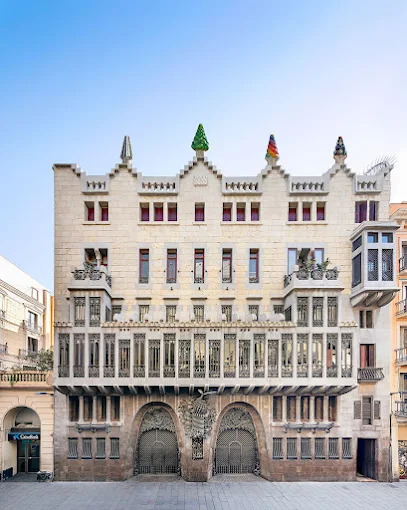
Photo: Palau Güell
Casa Vicens
Casa Vicens is considered Antoni Gaudí’s first major work. It shows a strong Oriental and Mudéjar influence, with a pronounced use of colour and geometric patterns. This building marks the beginning of a career that would forever transform Barcelona’s architecture.
Like many of Antoni Gaudí’s works of art, Casa Vicens reflects his fascination with craftsmanship and materials, integrating ceramic, iron and wood into a harmonious and striking composition.
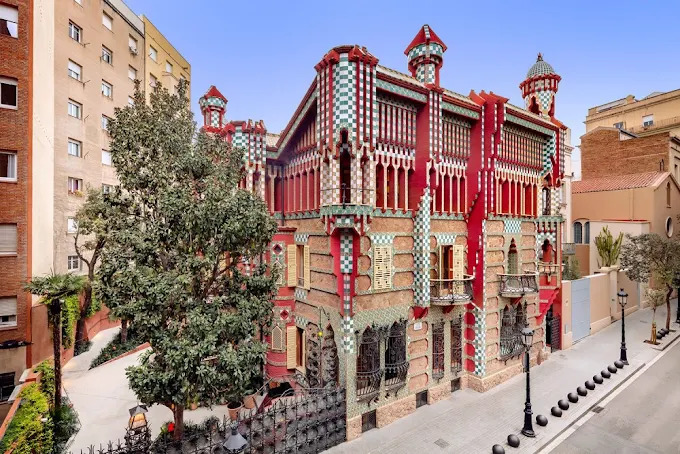
Photo: Casa Vicens
Casa Calvet
More understated than some of his other creations, Casa Calvet is one of the structures designed by Antoni Gaudí that appears more conventional at first glance—though no less interesting. It was conceived as a residential and commercial building, adapted to the urban regulations of its time.
Even so, Antoni Gaudí left his personal signature in the ornamental details, the bespoke furniture, and the carefully balanced façade composition, proving that even within formal constraints he was capable of innovation.
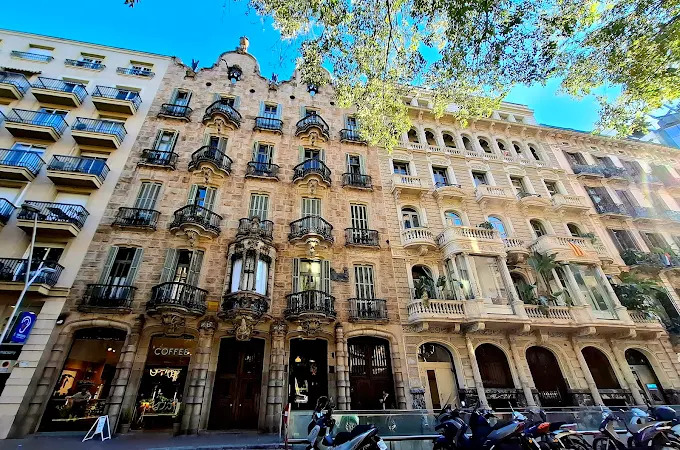
Photo: Casa Calvet
Torre Bellesguard or Casa Figueras
Set in a quieter area, Torre Bellesguard blends history and modernity. Antoni Gaudí drew inspiration from an old medieval castle to create one of his most distinctive works of art.
With straighter lines than usual, the structure reveals a lesser-known side of the architect, while still embracing the symbols and natural references that characterise the structures designed by Antoni Gaudí.
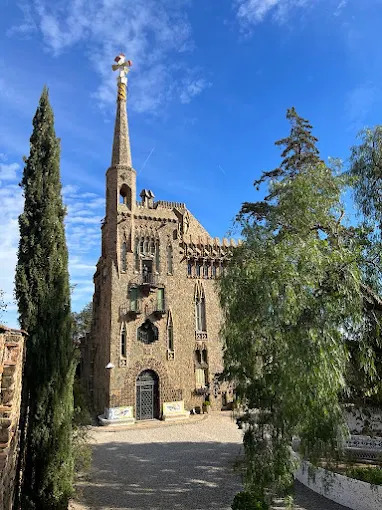
Photo: Torre Bellesguard or Casa Figueras
Colegio de las Teresianas
This educational building reflects Antoni Gaudí’s more austere and functional side. Built in brick with very restrained ornamentation, the Colegio de las Teresianas shows that Antoni Gaudí’s works of art do not always aim for immediate visual impact. If your visit is planned as part of a more intimate and unhurried itinerary, it can also fit beautifully into a couple’s getaway like the ones we highlight in our article on romantic plans in Barcelona.
Here, the architect prioritised functionality, natural light, and religious symbolism, integrating all of these elements into a coherent and elegant structure.
Pavilions of the Güell Estate
The Pavilions of the Güell Estate showcase Antoni Gaudí’s talent for transforming utilitarian spaces into true artistic pieces. The dragon gate and the buildings’ organic forms are particularly striking.
These constructions are part of the structures designed by Antoni Gaudí that anticipate aesthetic and technical solutions he would later develop in subsequent projects.
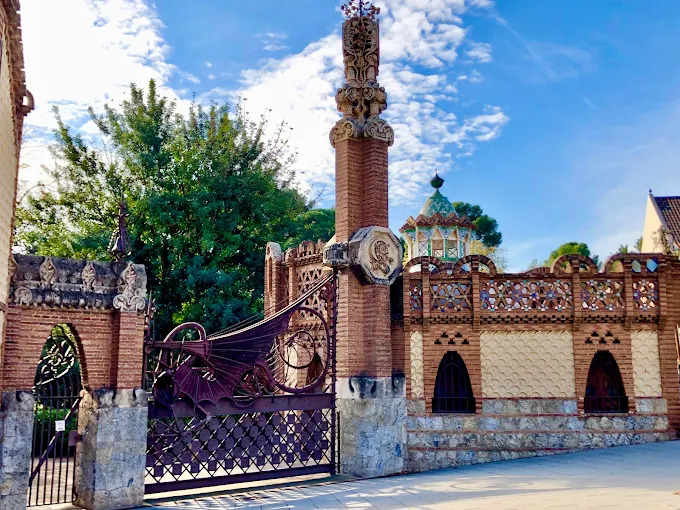
Photo: Pavilions of the Güell Estate
Portal Miralles
Portal Miralles is a lesser-known urban intervention, yet essential for understanding Antoni Gaudí’s creative universe. It is an undulating wall that served as the entrance to a former private estate.
This type of work demonstrates how Antoni Gaudí’s works of art can also be found in elements that may seem secondary within the urban landscape.
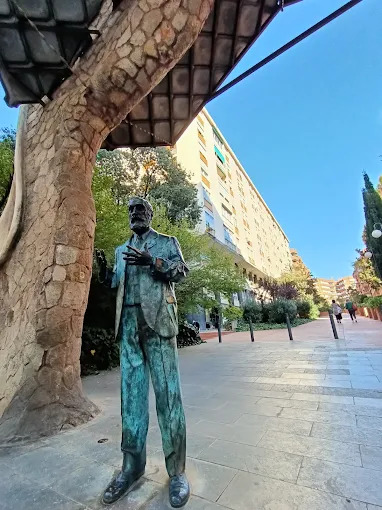
Photo: Portal Miralles
The lampposts of Plaça Reial
The lampposts in Plaça Reial are among Antoni Gaudí’s earliest works in public space. Although simple compared to his other creations, they already reveal his interest in functional and symbolic design.
These pieces are part of the structures designed by Antoni Gaudí that often go unnoticed, yet they enrich Barcelona’s urban experience.
Hercules Fountain (Palau de Pedralbes)
The Hercules Fountain is a discreet and elegant work that reflects Antoni Gaudí’s ability to integrate art and nature. Located in the gardens of the Palau de Pedralbes, it is one of Antoni Gaudí’s less-visited works of art, yet rich in symbolism.
Mosaic of the Church of Sant Pacià
This mosaic is a testament to Antoni Gaudí’s mastery of decorative techniques. Through the use of colour and composition, he created a work that combines spirituality and art, bringing this journey through his creations in the city to a close.
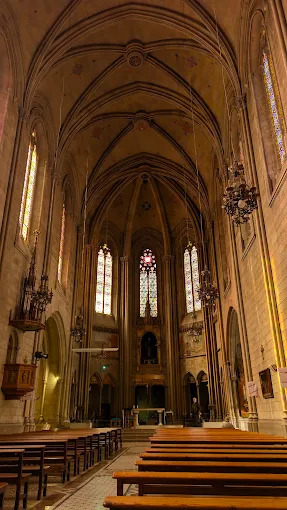
Photo: Mosaic of the Church of Sant Pacià
Musik Boutique Hotel and its guide: a different way to discover Barcelona
Discovering Antoni Gaudí’s creations is one of the most enriching experiences Barcelona has to offer. At Musik Boutique Hotel, we see the city as a cultural stage in constant dialogue between past and present. That is why our Barcelona guide not only invites you to visit monuments, but to experience architecture as part of your stay. If you would also like to deepen the context of the neighbourhood where so much comes to life, we highly recommend reading our article on the history of El Born.
From our privileged location, you can organise personalised routes to explore the structures designed by Antoni Gaudí, alternating the great icons with lesser-known corners. To plan your arrival with ease and start your route without any hassle, you may also find it helpful to check our guide on how much a taxi costs from Barcelona Airport. Barcelona reveals itself in the details, and we are here to help you discover them with the calm, comfort and inspiration that define the Musik Boutique Hotel experience.